Real estate seller leads are the foundation of every successful listing business, but finding the right ones before competitors do is harder than it used to be. Most agents assume they have a lead problem, when in reality they have a focus problem. They farm the same neighborhoods, call through stale expired and FSBO lists, and spend hours building CMAs for homeowners who were never close to selling. Meanwhile, the homeowners who are quietly preparing to list go unnoticed until a "for sale" sign appears with someone else's name on it. This guide explains what real estate seller leads actually are, how seller-intelligence scoring works, and how agents can find, nurture, and convert them without giving away a slice of their commission.
Direct answer: Real estate seller leads are homeowners whose property and behavior data show real signs of getting ready to sell soon. Agents find them by scoring properties on seller intent, adding verified contact details, and nurturing engaged homeowners until they are ready to list.

A clear view of scored real estate seller leads helps agents decide where to prospect next.
What Are Real Estate Seller Leads?
Real estate seller leads are homeowners who show measurable signs of preparing to sell, such as rising equity, major life changes, or increased research activity around home values. In short, they are the property owners most likely to list in the near future, before a lockbox ever goes on the door. Unlike a random contact list, a genuine seller lead is backed by data that points to intent, not just ownership.
Specifically, these signals can include a recent inheritance, a growing family, an empty nest, a job relocation, or a jump in home equity that makes moving financially attractive. In addition, behavioral clues matter too. For example, a homeowner who repeatedly checks their home's estimated value or requests a comparative market analysis is telling you something important, even if they never pick up the phone.
Therefore, the real skill in prospecting is not finding homeowners; almost every one of them owns a house. Instead, it is separating the homeowners who are actively showing seller signals from the much larger group who are not moving anytime soon. Platforms built specifically for seller intelligence, such as SellScore Pro, exist precisely to make that separation automatic instead of guesswork.
Why Traditional Seller Lead Lists Fall Short
For decades, agents have bought their way into real estate seller leads through referral networks and lead-generation portals. However, this approach comes with real costs beyond the monthly invoice.
First, most referral platforms take between 25% and 40% of the resulting commission once a deal closes. As a result, an agent who works hard to convert a lead can still hand over thousands of dollars for a contact they never truly owned. Furthermore, many platforms sell the same lead to several agents at once, so the homeowner fields calls from every direction while agents compete against their own paid source.
In contrast, long-term contracts lock agents into monthly fees regardless of results, making it hard to walk away from a system that is not converting. Similarly, static lead lists go stale fast. A homeowner who fit a "likely seller" profile six months ago may have already listed, refinanced, or changed their mind entirely.
Consequently, agents end up renting their pipeline instead of owning it. According to the National Association of Realtors, lead acquisition remains one of the largest controllable expenses in an agent's business, which is why more brokers are shifting toward owned, first-party seller intelligence instead of rented lead lists. For general consumer guidance on the home-selling process, the Consumer Financial Protection Bureau also publishes helpful background.
How Seller Lead Scoring Works
Seller lead scoring works by turning public property records, market activity, and homeowner engagement into a single, easy-to-read priority level. Most systems sort every property into three simple buckets: Hot, Warm, and Cold.
Specifically, a Hot score means a property is showing the strongest combination of seller signals right now, high equity, a recent life event, or heavy research activity around its value. A Warm score flags homeowners worth nurturing and watching over the next several months. Meanwhile, a Cold score simply means the property belongs in the long-term pipeline rather than today's call list.
For example, SellScore Pro applies this scoring nationwide, across all 50 states, down to the state, county, and ZIP code level. Its Heat Map then visualizes the strongest opportunities surrounding any address, so an agent can see, at a glance, exactly which blocks deserve attention this week instead of guessing which neighborhood to farm blindly.
Above all, scoring only matters if agents can actually reach the homeowner behind the data. That is why contact discovery, adding verified names, phone numbers, and emails to a scored property, is treated as a critical step rather than an afterthought. Because homeowner data is sensitive, agents should also understand how it is sourced and protected; see this privacy and data use policy for one example of how that works in practice.
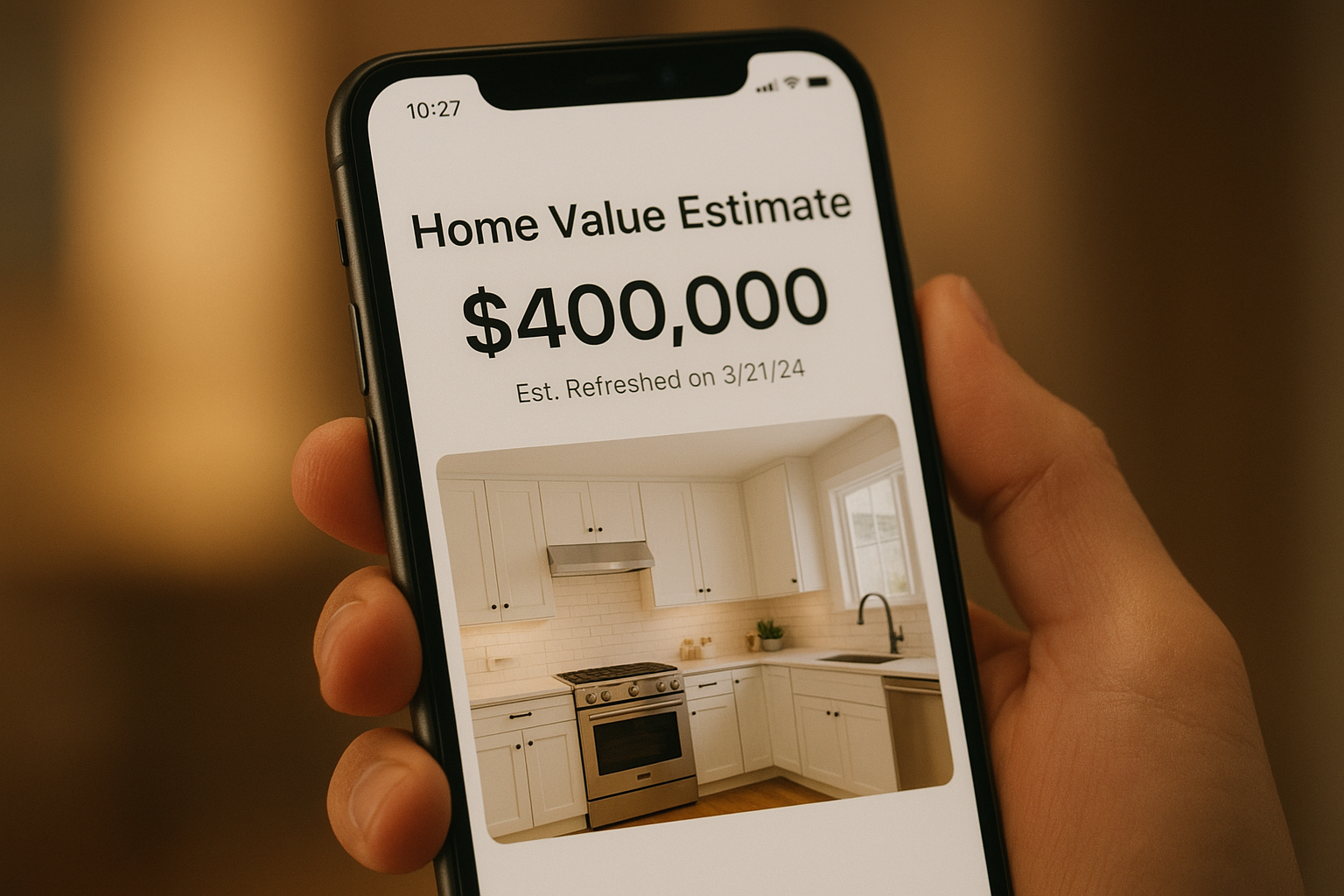
Personal home value pages turn casual curiosity into genuine real estate seller leads.
How to Find Motivated Seller Leads: A 6-Step Process
Turning seller intelligence into a signed listing follows a repeatable process. Below is a six-step workflow, similar to the one used inside SellScore Pro, though the same logic applies no matter which system an agent uses.
- Find the sellers. Score every property in a target area as Hot, Warm, or Cold, then use a heat map to see exactly where the strongest seller signals are clustering nearby.
- Get the contact. Pull verified phone numbers and emails for scored properties so outreach can happen the same day the opportunity is identified.
- Attract sellers directly. Share a personal home value page so homeowners can check their estimated value, add details like a remodel or pool, and voluntarily hand over contact information.
- Nurture automatically. Enroll every new contact into a long-running weekly email sequence lasting close to a year so the relationship keeps moving even when the calendar gets busy.
- Track engagement closely. Watch who opens emails, clicks links, or revisits a report multiple times, because repeat engagement is one of the clearest signs a homeowner is getting closer to listing.
- Start the real conversation. Use engagement data to time outreach, then bring a professional report or CMA to the first conversation so it feels like a consultation rather than a cold call.
Turning Seller Signals Into Signed Listings
Finding a scored, engaged homeowner is only half the job. Consequently, converting that opportunity into a signed listing requires the right tools at the right moment.
For instance, an AI-powered CMA and listing presentation builder lets an agent walk into a listing appointment with pricing data and visuals ready in minutes rather than hours. Similarly, a marketing hub keeps social posts, flyers, and follow-up templates in one place instead of scattered across several apps.
In addition, daily priorities, sometimes framed as a 7 a.m. accountability list, remove the guesswork of "who do I call today." Instead of scrolling through a spreadsheet, an agent opens the platform and sees the specific homeowners worth contacting right now, ranked by score and engagement.
Furthermore, an AI coach offering scripts and objection-handling playbooks helps newer agents sound confident on calls they might otherwise avoid. Above all, a full training academy reinforces the skills behind the technology, because software alone does not close a listing appointment; a well-prepared agent does. Together, these pieces replace a patchwork of dialers, CRMs, email tools, and presentation software with one connected workflow.

Turning engaged, motivated sellers into signed listings is the final step in working real estate seller leads.
Cost Comparison: Paid Leads vs. Owning Your Pipeline
Above all, the financial difference between renting leads and owning a pipeline is easy to underestimate until it is written out side by side.
Referral platforms typically charge 25% to 40% of the closing commission, on top of any monthly membership fee, and often share the same homeowner with multiple agents. In contrast, a flat-rate seller-intelligence subscription costs a predictable amount each month with no commission split and no long-term contract. For example, a Pro-tier subscription can run about $3.30 a day after a short paid trial, while including a set number of verified contact finds every month. Full pricing details, including a Spanish-language version, are available on the pricing page and the Spanish pricing page.
| Model | Referral / Lead Platform | Owned Seller-Intelligence Platform |
|---|---|---|
| Commission cost | 25%–40% per closed deal | $0 — no split |
| Contract | Often 6–12 months | Cancel anytime |
| Lead exclusivity | Frequently shared | Yours alone |
| Monthly cost | Varies + commission split | Roughly $99–$149/month |
Bilingual markets are common in many parts of the country, so agents serving Spanish-speaking homeowners may also want to review the Spanish contact page when setting up outreach and support.
Frequently Asked Questions About Real Estate Seller Leads
What are real estate seller leads?
Real estate seller leads are homeowners who show measurable signs of getting ready to sell, such as rising equity, a life event, or increased research around their home's value. They differ from general contact lists because the intent is backed by data rather than a guess.
How can agents find real estate seller leads without paying referral fees?
Agents can use seller-intelligence software that scores properties nationwide and surfaces verified contact information directly, instead of buying leads through a referral network. This keeps the full commission with the agent since there is no shared-fee arrangement.
Why do lead referral platforms take a commission split?
Referral platforms typically charge 25% to 40% of the closing commission because they treat the introduction itself as the paid service. In exchange, the agent gives up part of the deal for access to the homeowner's contact information.
How much do real estate seller leads typically cost?
Costs vary widely, from pay-per-lead pricing to flat monthly subscriptions with no commission split. A subscription-based model, such as roughly $3.30 a day, can be significantly cheaper over time than paying a percentage of every closed commission.
How long does it take to convert a seller lead into a signed listing?
Conversion timelines vary, but many motivated sellers take weeks to several months to move from initial curiosity to a signed listing agreement. That is why consistent, automated nurture over a period closer to a year matters more than a single follow-up call.
What is the difference between Hot, Warm, and Cold seller leads?
A Hot lead shows the strongest current seller signals, a Warm lead is worth nurturing and watching, and a Cold lead belongs in a longer-term pipeline. Sorting leads this way helps agents prioritize their limited calling time each day.
What mistakes do agents commonly make with seller leads?
The most common mistake is treating every contact the same, calling stale lists without any prioritization or scoring. Another frequent error is giving up after one unanswered call instead of enrolling the homeowner in a long-term nurture sequence.
What is a Home Value landing page and how does it generate leads?
A Home Value landing page lets a homeowner check an estimated value for their property and add details, like a remodel or new roof, that automated algorithms typically miss. In exchange for that personalized estimate, the homeowner shares contact information, turning anonymous curiosity into a real lead.
How does automated nurture help convert seller leads?
Automated nurture, such as a weekly email sent for close to a year, keeps an agent in front of a homeowner long after the first contact attempt fades. This matters because most sellers are not ready the moment they are first identified.
How should agents track seller lead engagement?
Agents should watch specific actions like email opens, link clicks, and repeat visits to a value estimate or market report. Rising engagement over time is one of the clearest signals that a homeowner's interest in selling is increasing.
Do real estate seller leads work the same way in every state?
The underlying signals, equity, life events, and market activity, apply nationwide, though local market conditions and price points vary by state, county, and even ZIP code. Platforms that score properties at a granular geographic level account for these regional differences.
How does a seller-intelligence subscription compare in cost to buying seller leads?
A flat monthly subscription, without a commission split, is often more predictable than paying a referral platform 25% to 40% of every closed deal. For agents who close even one or two extra listings a year, the fixed-cost model frequently pays for itself many times over.
Final Takeaway
In summary, real estate seller leads are not about finding homeowners; nearly everyone owns a house. Instead, they are about identifying which specific owners are showing real signals of moving soon, then reaching, nurturing, and converting them before another agent does. Whether an agent builds this process manually or leans on a dedicated platform, the fundamentals stay the same: score the signal, secure the contact, nurture consistently, and act when engagement rises. Agents who treat real estate seller leads as a focus problem, not a volume problem, consistently outperform those still buying rented, shared contact lists.
Scores, estimates, reports, and product guidance referenced above are informational tools, not an appraisal, legal advice, or a guarantee of a transaction.
