
Seller Lead Intelligence Platform for Agents in 2026
A seller lead intelligence platform is the system agents use to spot homeowners who show real signs of selling, often months before a "For Sale" sign ever goes up in the yard. Instead of cold-calling stale lists or farming a neighborhood at random, an agent using this kind of platform opens a dashboard and immediately sees which properties already show strong seller signals. In particular, this approach solves the problem most listing agents actually have, which is not a shortage of leads but a shortage of focus. As a result, the right seller lead intelligence platform turns scattered prospecting into a repeatable, data-driven pipeline that keeps producing even when an agent's calendar is packed.
Quick answer: A seller lead intelligence platform blends property records, market activity, and homeowner behavior into one score that tells agents which houses are most likely to list soon. It then supplies verified owner contact details and automated nurture so agents can act on that insight instead of guessing where to prospect next.
A seller lead intelligence platform turns raw property data into a simple heat map agents can act on immediately.
What Is a Seller Lead Intelligence Platform?
A seller lead intelligence platform is software that scores homes using market data, property history, and owner behavior to predict which homeowners are most likely to sell in the near future. Instead of buying a generic list of names, agents get a ranked view of real opportunity. For example, SellScore Pro sorts every eligible property into Hot, Warm, or Cold categories, so an agent immediately knows where to spend the next hour of prospecting time rather than guessing.
Consequently, this differs sharply from a typical lead-generation service. Most lead vendors sell the same contact to several agents at once and take a referral fee once a deal closes. In contrast, a true seller intelligence platform gives one agent exclusive access to the signal and lets that agent keep the entire commission. According to the National Association of Realtors, the large majority of home sellers still work with an agent rather than selling on their own, which means the real competitive edge is knowing who is about to sell before any other agent does.
Seller Lead Intelligence Platform vs. Traditional Lead Generation
Traditional portal leads and referral networks sell contact information after a homeowner has already raised their hand, which means every agent in the area is often racing for the same name. A seller lead intelligence platform, however, identifies intent before the homeowner ever fills out a form. Specifically, it watches for patterns such as ownership tenure, nearby sale activity, and even whether a homeowner is quietly checking their home's value online. That earlier signal is precisely what separates intelligence from a simple lead list.
Why Most Listing Agents Have a Focus Problem, Not a Lead Problem
Most agents do not lack leads. They lack a reliable way to tell which lead deserves attention today. Many spend hours building a comparative market analysis for a homeowner who was never seriously considering a sale, while the homeowner who really is getting ready to list goes unnoticed until a competing agent's sign appears first. According to the National Association of Realtors' 2023 Profile of Home Buyers and Sellers, the typical seller had lived in their home for about ten years before deciding to list, which means seller intent often builds quietly long before a phone call ever happens. Therefore, the real fix is not more leads. It is a sharper filter, and that is exactly the job a seller lead intelligence platform performs.
The Hidden Cost of Referral-Fee Lead Services
In addition, buying leads from referral platforms often makes the focus problem worse rather than better. Those services frequently hand the same homeowner to three or four agents simultaneously and then take 25 to 40 percent of the commission once someone closes the deal. As a result, agents end up renting a pipeline instead of owning one. A seller intelligence platform flips that model: the agent keeps the full commission and builds a list of prospects that belongs to them alone, not to a third-party referral network.
How a Seller Intelligence Platform Finds Hot Sellers
Behind the scenes, a seller intelligence platform pulls together public property records, tax data, ownership tenure, market activity, and homeowner engagement signals. Specifically, SellScore Pro scores every eligible residential property across all 50 states and sorts it into one of three tiers, giving agents a clear starting point instead of an overwhelming spreadsheet full of addresses nobody has qualified.
Nationwide Seller Scoring: Hot, Warm, and Cold
Homes marked Hot show the strongest seller signals and deserve a phone call this week. Homes marked Warm are worth nurturing and watching, since they often move into the Hot tier within a few months. Cold properties build the long-term pipeline, so agents are not starting from zero a year from now. Furthermore, the Heat Map view shows all three tiers layered over a map, so an agent can look at any neighborhood and instantly see where the strongest opportunities are clustered — a workflow that also works well for traditional farming, since it tells an agent exactly which streets deserve the most door-knocking effort.
Contact Find: Turning Properties Into People
Knowing which house is likely to sell is only half the job. An agent still needs a name, phone number, and email to start a conversation. That is why Contact Find matters: it converts an anonymous Hot property into a reachable homeowner. Pro plans include 50 contact finds every month, while Pro+ doubles that allowance to 100, giving busier agents more room to prospect without running out mid-month.
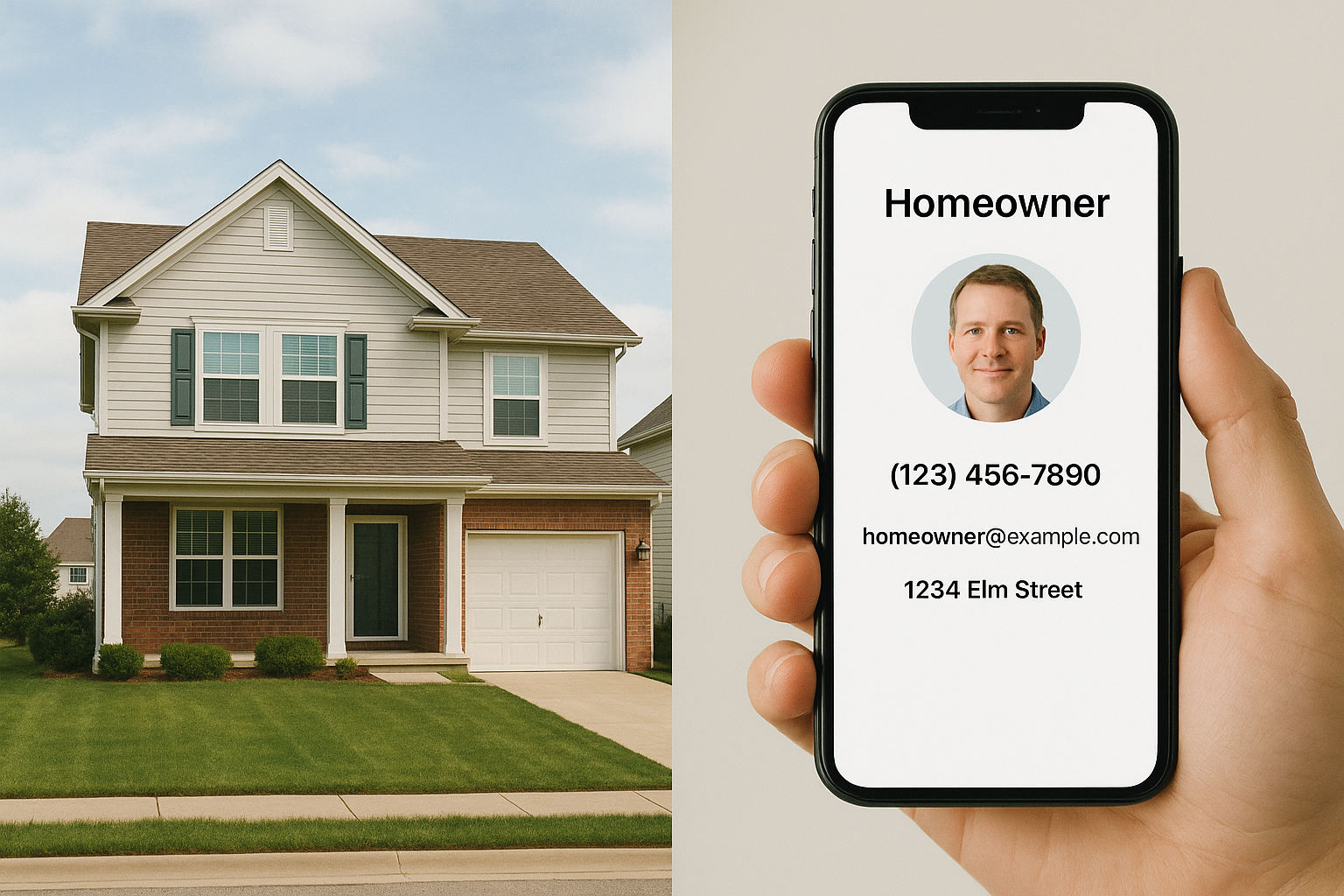
Turning a scored property into a real conversation is the core job of any seller lead intelligence platform.
The Data Sources Behind the Score
Specifically, the underlying model draws on county assessor records, deed and title history, recent comparable sales, and ownership tenure — a factor the U.S. Census Bureau tracks closely because it correlates strongly with mobility and, by extension, with the likelihood a household will move. Above all, no single data point predicts a sale on its own. Instead, a seller lead intelligence platform weighs dozens of signals together, which is exactly why the resulting score is far more reliable than guessing based on one factor like age of the home or length of ownership alone.
Turning Data Into Signed Listings: A Step-by-Step Workflow
Once the scoring and contacts are in place, the real work is turning attention into a signed listing agreement. Below is the sequence SellScore Pro uses to move a homeowner from anonymous data point to client.
- Find the sellers. The platform scores every eligible property nationwide and labels it Hot, Warm, or Cold, then displays the strongest opportunities on a Heat Map so agents know exactly where to prospect first.
- Get the contact. Contact Find adds a verified name, phone number, and email address to each scored property, giving agents a real way to reach the homeowner rather than a list of addresses.
- Attract sellers directly. A Personal Home Value Page lets homeowners enter upgrades like a remodel, pool, or solar panels that automated estimates usually miss, which turns quiet curiosity into a genuine reason to talk.
- Nurture automatically. Once a lead is captured, 48 weekly emails go out over nearly a year, keeping the agent's name in front of the homeowner even during a busy week or a slow season.
- Track engagement. Email opens, link clicks, and report views show exactly which homeowners are paying attention, so agents can prioritize people who are actively watching instead of guessing who is interested.
- Start the conversation. The Wealth Report gives agents a professional, homeowner-facing document they can email, print, or hand deliver to open a real conversation about next steps toward listing.
Automated Seller Nurture and Engagement Tracking
Above all, consistency wins listings more often than intensity does. A single follow-up call rarely convinces a homeowner to list, but a steady presence over months often does. That is why the nurture sequence inside a seller lead intelligence platform matters so much. With 48 weekly emails spread across nearly a year, an agent stays visible without manually writing a single message.
Why Engagement Tracking Beats Guesswork
Similarly, engagement tracking removes the guesswork from follow-up timing. If a homeowner opens three emails in a row and then clicks into a Wealth Report, that is a clear signal worth a phone call. In contrast, a homeowner who has not opened an email in four months probably belongs in a lower-priority bucket for now. Consequently, agents spend their limited calling time on the homeowners most likely to answer and engage, rather than working every contact with equal urgency.
What a Seller Lead Platform Should Cost
Pricing is often where agents get burned. Traditional referral platforms take 25 to 40 percent of a closed commission, which on a typical $400,000 home sale with a 3 percent commission can mean losing $3,000 to $4,800 off a single deal. A subscription-based seller lead intelligence platform works differently: the agent pays a flat monthly fee and keeps 100 percent of every commission earned afterward.
SellScore Pro Pricing Breakdown
For example, SellScore Pro's Pro plan runs about $99 a month after a FREE 7-day trial, which works out to roughly $3.30 a day. Pro+ runs $149 a month and doubles the monthly Contact Find allowance from 50 to 100. Both plans include nationwide scoring, the Heat Map, automated nurture, engagement tracking, the AI-powered CMA builder, and the full Training Academy. Full details, including how renewal billing works, are outlined on the SellScore Pro pricing page, and Spanish-speaking agents can review the same plans on the Spanish pricing page. Credit card required.
Seller Lead Intelligence Platform vs. Other Prospecting Tools
Not every prospecting tool solves the same problem, so it helps to see how a seller lead intelligence platform stacks up against the alternatives agents already know.
- Portal leads (Zillow, Realtor.com, etc.): These connect agents to buyers and sellers who have already raised a hand, but multiple agents usually compete for the same contact in real time.
- Referral networks: These sell a lead after intent is already visible and take a cut of the closing commission, which can cost thousands of dollars per deal, as covered above.
- Predictive analytics tools built for investors: Some platforms, including well-known names like Revaluate, score homeowner likelihood to move but are often built around investor or wholesaler workflows. For a side-by-side look, see this Revaluate alternative comparison.
- Generic lead generation companies: Many simply sell contact volume without any scoring at all. Our comparison of the best seller lead generation companies for real estate agents breaks down how these services differ in practice.
- Listing-specific lead tools: A few platforms focus narrowly on listing-side prospecting rather than buyer leads. If that is your priority, this listing lead generation tool guide walks through what to look for.
In short, a true seller lead intelligence platform sits above all of these by combining scoring, exclusivity, verified contacts, and automated nurture in one subscription, rather than forcing an agent to stitch several tools together.
Choosing the Right Seller Intelligence Tool for Your Market
Coverage matters as much as features. A seller intelligence tool that only works in a handful of metro areas is not much help to an agent working a smaller county or a rural market. SellScore Pro scores eligible residential properties across all 50 states with data down to the state, county, and ZIP code level, so agents in a small town have the same access as agents in a major city.
Coverage, Language Access, and Data Privacy
Furthermore, language access matters for agents serving bilingual communities. The platform's marketing materials and pricing information are available in English and Spanish, and Spanish-speaking agents or homeowners can reach the team directly through the Spanish contact page. Because privacy is a real concern when handling homeowner data, it is also worth reviewing how a platform stores and uses information; SellScore Pro publishes its practices on its privacy and data use page.
It is worth noting that scores, estimates, and reports generated by any seller intelligence tool are informational only. They are not an appraisal, legal advice, or a guarantee that a homeowner will sell. Agents still need to verify details and use professional judgment before presenting a number to a client.

A clear, data-backed report gives agents a natural reason to start the listing conversation.
Common Mistakes Agents Make With Seller Intelligence Tools
Even the best seller lead intelligence platform will underperform if it is used poorly. The most frequent mistake is treating every scored contact the same way instead of calling Hot leads first and letting Warm and Cold leads ride the automated nurture sequence. Another common error is skipping that nurture sequence entirely and relying only on a single phone call, which loses homeowners who simply need more time before deciding to sell.
A third mistake, specifically, is ignoring engagement data. Because open rates and click activity reveal real intent, an agent who checks that data weekly will always out-prospect one who calls down a list in the same order every month. Finally, some agents never send the Wealth Report or Personal Home Value Page to warm contacts, which means they skip the exact tool designed to start the listing conversation naturally.
Measuring ROI: What Results Should You Expect?
Because every market is different, exact numbers will vary. However, agents typically judge a seller lead intelligence platform on four metrics: how many Hot leads convert to appointments, how many Warm leads graduate into Hot within 90 days, how many nurture emails get opened, and ultimately how many signed listings trace back to the platform each quarter. Tracking these four numbers monthly makes it easy to see whether the subscription is paying for itself, since even one additional listing a quarter typically covers a full year of a Pro or Pro+ subscription several times over.
Frequently Asked Questions About Seller Lead Intelligence Platforms
What is a seller lead intelligence platform?
A seller lead intelligence platform is software that scores homes and homeowners based on data and behavior to show agents who is most likely to sell soon. It replaces guesswork with a ranked list of real opportunity, plus the contact details needed to follow up.
How does a seller lead intelligence platform find sellers before they list?
It combines public property records, ownership tenure, market activity, and homeowner engagement signals, then scores each home Hot, Warm, or Cold. Homeowners who visit a home value page or open follow-up emails add even more signal to that score.
Why use a seller lead intelligence platform instead of buying leads?
Traditional referral platforms often sell the same lead to multiple agents and take 25 to 40 percent of the commission. A subscription-based platform gives one agent exclusive insight and lets that agent keep the full commission after paying a flat monthly fee.
How much does a seller lead intelligence platform cost?
SellScore Pro's Pro plan starts with a FREE 7-day trial and then runs about $99 a month, or roughly $3.30 a day. Pro+ costs $149 a month and includes double the monthly Contact Find allowance. Credit card required.
How long does it take to see results from a seller intelligence platform?
Most agents start reaching Hot-scored homeowners within the first week, but the automated 48-week nurture sequence is built for the long game. Many listings come from homeowners who first engaged three, six, or even nine months earlier.
What is the difference between a seller lead intelligence platform and a traditional lead-generation service?
A traditional lead-generation service typically sells a raw contact list without scoring or exclusivity, and often charges a referral fee at closing. A seller lead intelligence platform ranks opportunity first, gives one agent access, and charges a flat subscription instead of a commission split.
What common mistakes do agents make with seller intelligence tools?
The biggest mistake is treating every scored contact the same way instead of prioritizing Hot leads first. Another common error is skipping the nurture sequence and relying only on a single phone call, which loses homeowners who need more time before deciding to sell.
What features should a good seller lead intelligence platform include?
Look for nationwide property scoring, verified owner contact information, automated long-term nurture, engagement tracking, and tools to build a CMA or listing presentation quickly. Together these features cover the full path from raw data to a signed listing.
Is SellScore Pro's seller lead intelligence platform available in Spanish?
Yes. SellScore Pro's website, including pricing details, is available in English and Spanish, and Spanish-speaking users can reach support through a dedicated Spanish contact page.
What is a Heat Map inside a seller intelligence platform?
A Heat Map is a visual layer that shows Hot, Warm, and Cold scored properties across a map view, so an agent can see at a glance which streets or neighborhoods hold the strongest seller opportunities right now.
How does automated seller nurture work?
Once a lead is captured, the platform sends one email per week for 48 weeks, covering market updates and home value information. This keeps the agent visible to the homeowner without requiring manual follow-up every week.
Can a seller lead intelligence platform replace my CRM and dialer?
For many agents, yes. A platform like SellScore Pro combines scoring, contact information, nurture emails, engagement tracking, and a pipeline view in one place, which removes the need to juggle a separate CRM, dialer, and email tool.
Are the scores and reports from a seller intelligence platform accurate?
Scores and reports are informational tools built from available data, not a formal appraisal or a guarantee that a homeowner will sell. Agents should treat the output as a strong starting point for a conversation, then verify details before presenting numbers to a client.
How do I get started with a seller lead intelligence platform?
Most platforms offer a low-cost trial period to test the scoring and workflow before committing to a full subscription. SellScore Pro, for example, offers a FREE 7-day trial, which then converts to a standard monthly plan unless canceled. Credit card required.
What data sources power a seller lead intelligence platform?
A seller lead intelligence platform pulls from public property records, county tax assessor data, deed and title history, nearby market activity, and homeowner engagement signals such as email opens or home value page visits. SellScore Pro combines all of these sources into a single Hot, Warm, or Cold score for every eligible property.
How is a seller lead intelligence platform different from predictive analytics tools built for investors?
Predictive analytics tools built for investors usually focus on distressed properties, pre-foreclosures, or absentee owners looking for a quick, below-market sale. A seller lead intelligence platform built for listing agents instead focuses on traditional homeowners likely to list at market value, which is a very different audience and a very different conversation.
Can a seller lead intelligence platform help with neighborhood farming?
Yes. The Heat Map view inside a seller lead intelligence platform shows Hot, Warm, and Cold properties layered across a specific neighborhood or ZIP code, making it easy to combine traditional farming with data-backed prioritization instead of knocking on every door with equal effort.
Does a seller lead intelligence platform work for brand-new agents without an existing database?
Yes. Because the platform supplies both the scored property and the verified owner contact, a new agent can start prospecting on day one without an existing sphere of influence or a purchased contact list. The 48-week nurture sequence also helps new agents maintain consistent follow-up while they are still learning the business.
Final Thoughts on Choosing a Seller Lead Intelligence Platform
In the end, a seller lead intelligence platform is not about collecting more names. It is about knowing which homeowner deserves a phone call today, which one deserves a year of gentle nurture, and which one is simply not ready yet. Because of this shift from volume to focus, agents spend less time guessing and more time listing. Whether an agent chooses SellScore Pro or another provider, the standard worth demanding is the same: nationwide scoring, real contact information, automated nurture, and clear engagement data, all without paying away a chunk of the commission. Ultimately, agents who treat their pipeline as an owned asset, rather than a rented list, tend to build the more durable listing business over time. For agents ready to see how this looks in practice, visiting SellScore Pro is a reasonable next step toward making a seller lead intelligence platform part of your everyday prospecting routine.