Unique real estate marketing ideas are the difference between an agent who waits for the phone to ring and one who already knows which homeowners are about to list. Most agents do not actually have a lead problem; they have a focus problem, spending hours on stale lists and blind farming while the real opportunities go unnoticed next door. This article walks through creative, data-backed strategies that help listing agents find sellers earlier, start better conversations, and stay memorable for months without burning out their calendar.
Quick answer: The most effective unique real estate marketing ideas combine seller-signal data, a personalized online touchpoint like a home value page, and automated weekly follow-up, so agents spend their time talking to homeowners who are actually close to selling instead of guessing.

Reviewing seller signals is often the first step behind unique real estate marketing ideas that actually convert.
What Are Unique Real Estate Marketing Ideas?
Unique real estate marketing ideas are prospecting and outreach methods that go beyond the standard postcard, door knock, or cold call. Instead, they rely on data to identify who is likely to sell, then use personalized digital touchpoints and consistent automated follow-up to build a relationship before a competing agent shows up with a listing agreement.
In practice, this means an agent opens a dashboard, sees which homes nearby are showing the strongest seller signals, and reaches out with something relevant rather than a generic "thinking of selling?" flyer. For example, a homeowner who just finished a kitchen remodel might respond far better to a message referencing home value and recent upgrades than a mass mailer ever could.
Why Most Real Estate Marketing Strategies Fall Flat
Many agents assume more volume equals more listings, so they farm neighborhoods blindly and call through purchased lists alongside every other agent in town. Consequently, response rates stay low, and the homeowners who were actually preparing to sell quietly list with someone else.
In addition, buying leads from referral platforms often makes the problem worse. These services frequently take 25 to 40 percent of the commission, lock agents into contracts, and hand the same homeowner to multiple agents at once. As a result, agents end up renting their pipeline instead of owning it outright.
According to the National Association of Realtors, the vast majority of home sellers still choose to work with a licensed agent rather than selling on their own, which means the opportunity is there. The challenge is reaching the right homeowner before someone else does, and that is exactly where unique real estate marketing ideas make a measurable difference.
Unique Real Estate Marketing Ideas That Actually Generate Listings
Rather than guessing where to prospect, a growing number of agents now follow a repeatable process built around seller signals. Below is a step-by-step version of that process, similar to the approach used inside SellScore Pro, a seller-intelligence platform built by real estate brokers for agents who want more listings without paying referral fees.
- Score the market. Sort every home in a target area into Hot, Warm, or Cold based on ownership length, equity, and other seller signals, then start outreach with the Hot group first.
- Build a home value page. Give homeowners a simple place to check their estimate and add details like a remodel, pool, or solar panels that automated valuations typically miss.
- Attach real contact details. Add verified names, phone numbers, and emails so outreach can happen immediately by call, text, or email instead of guessing at an address.
- Automate weekly nurture. Enroll each contact in a long-term email sequence, such as one message a week for 48 weeks, so the relationship keeps moving even on busy weeks.
- Watch engagement, not guesses. Track email opens, link clicks, and report views to see which homeowners are actually paying attention right now.
- Follow up with relevance. Use that engagement history and a coaching script to open a specific, timely conversation instead of a generic pitch.
Creative Seller Outreach Tactics Beyond the Basics
Once the core process is running, several creative outreach tactics tend to outperform generic marketing. For instance, sharing a personal home value page through a QR code on a yard sign, business card, or open-house flyer turns passive curiosity into a captured contact. Similarly, posting the same link on social media reaches neighbors who are browsing but not yet ready to call anyone directly.
Another approach involves sending a printed Wealth Report, a professional homeowner-facing summary of local value trends, either by mail or in person at a community event. Because the report invites the homeowner to add missing details about their property, it naturally opens a two-way conversation rather than a one-sided pitch.
Furthermore, agents working bilingual markets often see stronger response rates by offering materials in both English and Spanish. SellScore Pro's own website is available in both languages, including a Spanish-language pricing page and a Spanish contact page, which reflects how much reach bilingual outreach can add in diverse neighborhoods.
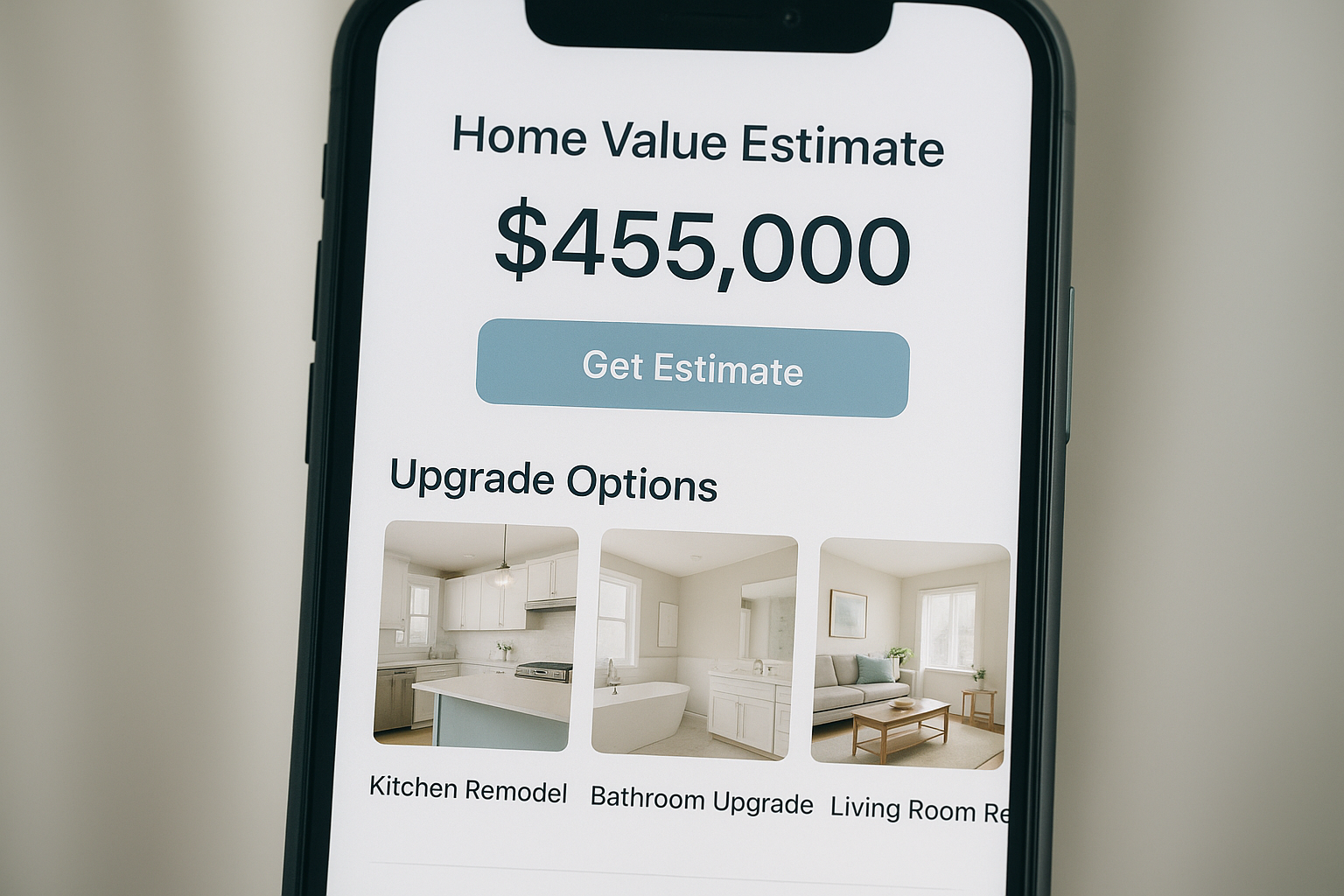
A personal home value page gives curious homeowners a reason to raise their hand first.
How to Measure Which Marketing Approaches Are Working
Creative ideas only matter if an agent can tell which ones are producing real interest. Therefore, engagement tracking is one of the most underused tools in a listing agent's toolkit. Instead of wondering whether a homeowner opened an email, agents can see opens, clicks, repeat visits to a home value page, and activity on a Wealth Report or CMA in one place.
Specifically, a homeowner who opens three weekly emails in a row and revisits their home value page deserves a phone call that week, not six months later. In contrast, a contact who has not engaged at all can stay in the automated nurture sequence without pulling time away from hotter opportunities. This kind of prioritization is what separates a focused marketing plan from a scattered one.
For agents comparing tools, it helps to review how pricing and features line up with actual workflow needs; the SellScore Pro pricing page breaks down what is included at each plan level, and the privacy and data use policy is worth a look before sharing any contact information through a new platform.
Putting Unique Real Estate Marketing Ideas Into a Daily Routine
Even the best tactics fail without a routine. As a result, many successful agents start each morning with a short priority list: three Hot contacts to call, one engaged lead to follow up with, and one new home value page share for the day. This keeps unique real estate marketing ideas from becoming a one-time experiment and turns them into a repeatable habit.
Above all, consistency beats intensity. A homeowner who receives a relevant, well-timed message every week for several months is far more likely to remember an agent's name than one who got a single aggressive pitch and nothing else. For agents who want this structure built in, platforms that include daily priorities and coaching, such as SellScore Pro's 7AM Accountability feature, can remove the guesswork around what to do each morning.

A short daily routine keeps new marketing ideas consistent instead of occasional.
Frequently Asked Questions
What are unique real estate marketing ideas?
Unique real estate marketing ideas are prospecting and outreach strategies that go beyond generic postcards and cold calling, using data, personalization, and automation to reach homeowners before competing agents do. They typically combine seller-signal data, targeted content, and consistent follow-up.
How can agents find motivated sellers before competitors?
Agents can find motivated sellers by using seller-intelligence software that scores homes based on signals like ownership length, equity, and life events. This lets agents prioritize outreach to households showing the strongest likelihood of listing soon, instead of calling random names on a list.
Why do traditional marketing ideas often fail for listing agents?
Traditional tactics like blind farming and generic mailers fail because they reach every homeowner equally, regardless of whether they are close to selling. As a result, agents waste time and budget on people who were never going to list.
What is the difference between paid leads and seller-intelligence tools?
Paid leads are typically shared with multiple agents and come with referral fees of 25 to 40 percent of commission. Seller-intelligence tools instead surface homeowners from public and market data that the agent owns outright, with no shared leads or ongoing fees.
How much does SellScore Pro cost?
SellScore Pro offers a 3-day trial for $1, then renews at $98 and continues at $99 per month for the Pro plan, or $149 per month for Pro+. That works out to roughly $3.30 a day with no referral fees or long-term contracts.
How long does it take to see results from new marketing ideas?
Most agents see early engagement, such as home value page visits or email opens, within the first few weeks. Signed listings usually take longer, since nurture sequences are designed to stay in front of sellers for up to 48 weeks before they are ready to act.
What mistakes do agents make when trying new marketing tactics?
The most common mistake is giving up after one unanswered call or unopened email instead of following a consistent nurture cadence. Another frequent error is spreading effort evenly across every homeowner in a farm area instead of prioritizing the ones showing real seller signals.
What is a Personal Home Value Page?
A Personal Home Value Page is a branded landing page where homeowners can request an estimate and add details automated valuations miss, like a remodel or new roof. It turns anonymous curiosity into a warm conversation starter for the agent.
How does automated seller nurture work?
Automated seller nurture sends a scheduled series of emails, such as one per week for 48 weeks, so a homeowner stays in regular contact with an agent even without manual follow-up. This keeps the agent visible until the homeowner is ready to sell.
What is the best way to combine online and offline marketing?
The best approach pairs a digital hub, like a home value page or Wealth Report, with offline touches such as QR codes on flyers, business cards, and door-knock leave-behinds. This way, every offline impression has a clear, trackable next step online.
Can small or solo agents use unique real estate marketing ideas effectively?
Yes, solo agents often benefit the most, since prioritized seller data and automated nurture replace hours of manual list-building and follow-up. This lets one agent cover a market that would normally require a team.
How does a Heat Map help agents target the right homeowners?
A Heat Map visually ranks nearby properties as Hot, Warm, or Cold based on seller signals, so an agent can see at a glance which blocks deserve attention first. This replaces guesswork with a clear, data-backed prospecting order.
Is a $1 trial a good way to test new real estate marketing software?
A low-cost trial lets an agent explore seller scoring, contact data, and nurture tools before committing to a monthly plan. It is a practical way to confirm the workflow fits a specific market before paying full price.
What role does engagement tracking play in real estate marketing?
Engagement tracking shows which homeowners open emails, click links, or revisit a Wealth Report, turning vague interest into a measurable signal. Agents can then focus their calls and visits on the people paying the most attention.
How do I get started with SellScore Pro?
Agents can start the 3-day trial for $1 directly on the SellScore Pro pricing page, choose Pro or Pro+, and begin reviewing scored homes and contacts in their market immediately. Support is available by email at [email protected] for setup questions.
Final Thoughts
In the end, unique real estate marketing ideas work best when they replace guesswork with evidence. Rather than farming blindly or paying away commission for shared leads, agents who combine seller-signal data, a personal home value page, and consistent weekly nurture tend to spend less time chasing dead ends and more time in real conversations with people who are actually ready to sell.
Ultimately, the goal is simple: find the right homeowners first, stay visible without burning out, and let engagement data decide who gets a phone call today. Platforms like SellScore Pro were built by brokers specifically to put that entire workflow in one place, so trying one or two of these unique real estate marketing ideas this month is a reasonable, low-risk way to see what a more focused pipeline can look like.
