ChatGPT for real estate agents is a shorthand term for the way agents now use OpenAI's AI chatbot to draft listing descriptions, follow-up emails, and scripts in a fraction of the time it used to take. In fact, many agents now open a chat window before they open a CMA template. However, a chatbot cannot tell an agent which homeowner down the street is quietly getting ready to sell. That gap matters, because speed without the right prospect still produces no commission. This guide covers how agents are using ChatGPT today, where it genuinely helps, where it falls short, and how pairing it with real seller data closes the gap.
Quick answer: ChatGPT for real estate agents works well for writing listing descriptions, emails, and social captions, but it cannot identify which homeowners are actually likely to sell. Agents typically get the best results by using ChatGPT for content creation and a dedicated seller-intelligence platform, such as SellScore Pro, for finding and prioritizing real opportunities.

Agents increasingly turn to ChatGPT for real estate agents to speed up everyday writing tasks.
What Is ChatGPT for Real Estate Agents?
ChatGPT for real estate agents describes the practice of using OpenAI's large language model, a system trained to generate human-sounding text, to produce marketing copy, client communication, and internal notes. Specifically, agents type a request, such as "write a listing description for a three-bedroom ranch," and the tool returns a draft in seconds. As a result, tasks that once took thirty minutes can take five.
According to Wikipedia's overview of ChatGPT, the tool launched in late 2022 and has since been adopted across many industries, including real estate, for content generation tasks. However, it is important to understand what it is not. ChatGPT does not browse live MLS data, does not know a specific home's condition, and does not have access to a brokerage's private client records unless an agent manually provides that information in the prompt.
How Agents Are Using ChatGPT in Real Estate Right Now
In practice, most agents use AI chatbots for a narrow set of repetitive writing tasks rather than for strategic decisions. The following subsections cover the three most common use cases agents report today.
Writing Listing Descriptions and Social Captions
Agents feed ChatGPT a list of property features and ask for a description matching a certain tone, such as "warm and family-focused" or "sleek and modern." Consequently, the draft usually needs only light editing rather than being written from scratch. For example, an agent might generate five caption variations for the same listing photo and choose the strongest one for Instagram.
Drafting Follow-Up Emails and Scripts
Similarly, agents ask ChatGPT to draft cold-call openers, objection-handling scripts, or a sequence of check-in emails for a homeowner who has gone quiet. This saves time on the blank-page problem. Still, the agent must personalize each draft so it does not read like a form letter.
Summarizing Market Data and CMAs
Some agents paste raw comp data into ChatGPT and ask for a plain-language summary to include in a client-facing report. That said, every number still needs verification, and wording must avoid language that could raise fair housing concerns, as outlined by the U.S. Department of Housing and Urban Development.

Market summaries drafted with AI still require a human check against real local data.
Where ChatGPT Falls Short for Real Estate Agents
Despite its usefulness for writing, ChatGPT has clear limits for real estate prospecting. First, it has no access to live property records, so it cannot tell an agent which homeowner is quietly preparing to sell. Second, it can produce confident-sounding but inaccurate figures, a known issue often called hallucination. Third, pasting client details into a public chatbot raises data privacy questions that every agent should think through carefully, similar to the considerations described in SellScore Pro's data use policy.
In addition, the National Association of Realtors continues to track rising technology adoption among agents, and AI writing tools are part of that trend. Even so, adoption of a writing tool does not solve the underlying challenge most agents face: knowing where to focus. Therefore, ChatGPT works best as one piece of a larger system rather than a complete solution on its own.
How to Use ChatGPT for Real Estate Prospecting: A Step-by-Step Approach
Above all, combining AI writing with real seller data produces better results than using either one alone. Here is a practical sequence agents can follow.
- Define your target area. Pick a specific neighborhood, ZIP code, or price range before writing any prompts, since vague requests produce generic content that will not resonate with real homeowners.
- Summarize market context. Paste recent sales data into ChatGPT and ask it to summarize trends in plain language, because the chatbot cannot pull live MLS figures on its own.
- Draft CMA talking points. Use that summary to generate talking points for a comparative market analysis, then verify every figure against your actual data sources before presenting it.
- Write a nurture email sequence. Ask ChatGPT to draft a multi-email sequence tailored to a homeowner segment, adjusting tone so it sounds like you rather than a template.
- Review for compliance and accuracy. Read every AI-generated draft for fair housing language and factual accuracy before it reaches a client, since the agent remains fully responsible for the content.
- Prioritize real opportunities. Feed your polished content into a seller-intelligence platform that scores homeowners by likelihood to sell, so prospecting time goes toward addresses with the strongest actual signals.
ChatGPT vs. Seller-Intelligence Platforms: Why Agents Pair the Two
ChatGPT writes; it does not search property and market signals to flag which homeowner is ready to list. That is precisely the gap SellScore Pro was built to close. Instead of guessing which address to call, agents open the platform and see properties scored Hot, Warm, or Cold across all 50 states, backed by a Heat Map that shows the strongest seller opportunities nearby. Contact Find then adds the owner's name, phone number, and email, so the agent can actually reach them.
Furthermore, once a lead is identified, SellScore Pro triggers 48 weekly nurture emails automatically, something ChatGPT cannot schedule or track on its own. Engagement tracking then shows which homeowners are opening emails or revisiting their Wealth Report, so follow-up effort goes to the people paying attention. For agents comparing options, full details are on the SellScore Pro pricing page, which covers the $99 Pro plan and $149 Pro+ plan, both with no referral fees or commission splits.
Notably, agents working bilingual markets can also view a Spanish-language pricing page and reach support through the Spanish contact page, which helps Spanish-speaking homeowners engage with the Home Value page and Wealth Report in their preferred language.
Best Practices for Using AI Tools as a Real Estate Agent
To get consistent value from AI tools, agents should treat every draft as a starting point rather than a finished product. Specifically, the following practices help keep AI use effective and compliant.
- Edit every AI draft for fair housing language before publishing it.
- Verify all prices, dates, and market figures against a real data source.
- Avoid pasting sensitive client details into a public chatbot.
- Check brokerage policy on disclosing AI-generated content to clients.
- Pair AI writing with a tool that identifies real seller opportunities, rather than relying on guesswork.
Common Mistakes Agents Make With AI in Real Estate
Even experienced agents fall into a few predictable traps when they first start using AI tools. For instance, some copy and paste a draft directly into a listing without reviewing it for accuracy or tone. Others treat an AI-generated home value estimate as reliable, even though the tool has no access to current comps. Meanwhile, some assume the chatbot will eventually "find" leads on its own, which it was never designed to do. As a result, agents who skip a dedicated seller-identification step often end up prospecting the same stale list as every other agent in town.
Frequently Asked Questions About ChatGPT for Real Estate Agents
What is ChatGPT for real estate agents?
ChatGPT for real estate agents refers to agents using OpenAI's AI chatbot to draft listing descriptions, follow-up emails, scripts, and marketing copy more quickly. It generates text based on prompts but does not access live MLS data or identify which homeowners are likely to sell.
How much does ChatGPT cost for real estate agents?
ChatGPT offers a free tier with usage limits, while paid plans are billed monthly directly through OpenAI. That pricing is separate from any real estate-specific software an agent uses for lead generation or client management.
Can ChatGPT replace a real estate CRM?
No, ChatGPT cannot replace a CRM because it does not store contact records or automate ongoing nurture sequences. It is a writing assistant, not a system for managing and prioritizing homeowner relationships over time.
Is ChatGPT accurate for home values and CMAs?
ChatGPT is not reliable for home values because it lacks access to current listings, tax records, or local comps. Agents should treat any figures it produces as a draft and verify every number before sharing it with a client.
How do real estate agents use ChatGPT for listing descriptions?
Agents feed ChatGPT the property details, such as square footage and upgrades, and ask it to draft a description in a specific tone. The agent then edits the draft for accuracy and fair housing compliance before publishing it.
Does ChatGPT know which homeowners are about to sell?
No, ChatGPT has no connection to property records or market signals, so it cannot tell an agent which homeowner is likely to list. That task requires a seller-intelligence platform that scores properties using real data.
Is it legal to use ChatGPT-written content in real estate marketing?
AI-generated content is generally allowed, but agents remain fully responsible for fair housing compliance and accuracy. Every draft should be reviewed for language that could be read as discriminatory before it reaches the public.
How long does it take to learn ChatGPT for real estate tasks?
Most agents become comfortable writing effective prompts within a few hours of regular practice. Learning which tasks to delegate to AI versus which still need a human touch typically takes a bit longer.
What is the difference between ChatGPT and a seller-intelligence platform like SellScore Pro?
ChatGPT writes content on request, while a seller-intelligence platform like SellScore Pro scores properties nationwide as Hot, Warm, or Cold and supplies owner contact information. In short, ChatGPT helps agents say something, and seller-intelligence software helps agents know who to say it to.
What are common mistakes agents make with ChatGPT?
Common mistakes include publishing AI drafts without editing, treating generated numbers as verified data, and assuming the chatbot can find leads on its own. Skipping a compliance review before sending AI-written copy to clients is another frequent error.
Can ChatGPT help with follow-up emails for homeowners?
Yes, ChatGPT can draft personalized follow-up email sequences based on a homeowner's situation, such as an expired listing. Agents still need a system to track opens and clicks so they know when to send the next message.
Should agents disclose AI use to clients?
Many brokerages now recommend or require disclosure when AI tools produce client-facing content. Checking brokerage policy and local regulations before relying on AI-generated materials is a reasonable best practice.
Is ChatGPT available in Spanish for bilingual agents?
Yes, ChatGPT can draft content in Spanish on request, which helps bilingual agents serve Spanish-speaking homeowners. Pairing that with a bilingual platform keeps the entire homeowner experience consistent from first contact to closing.
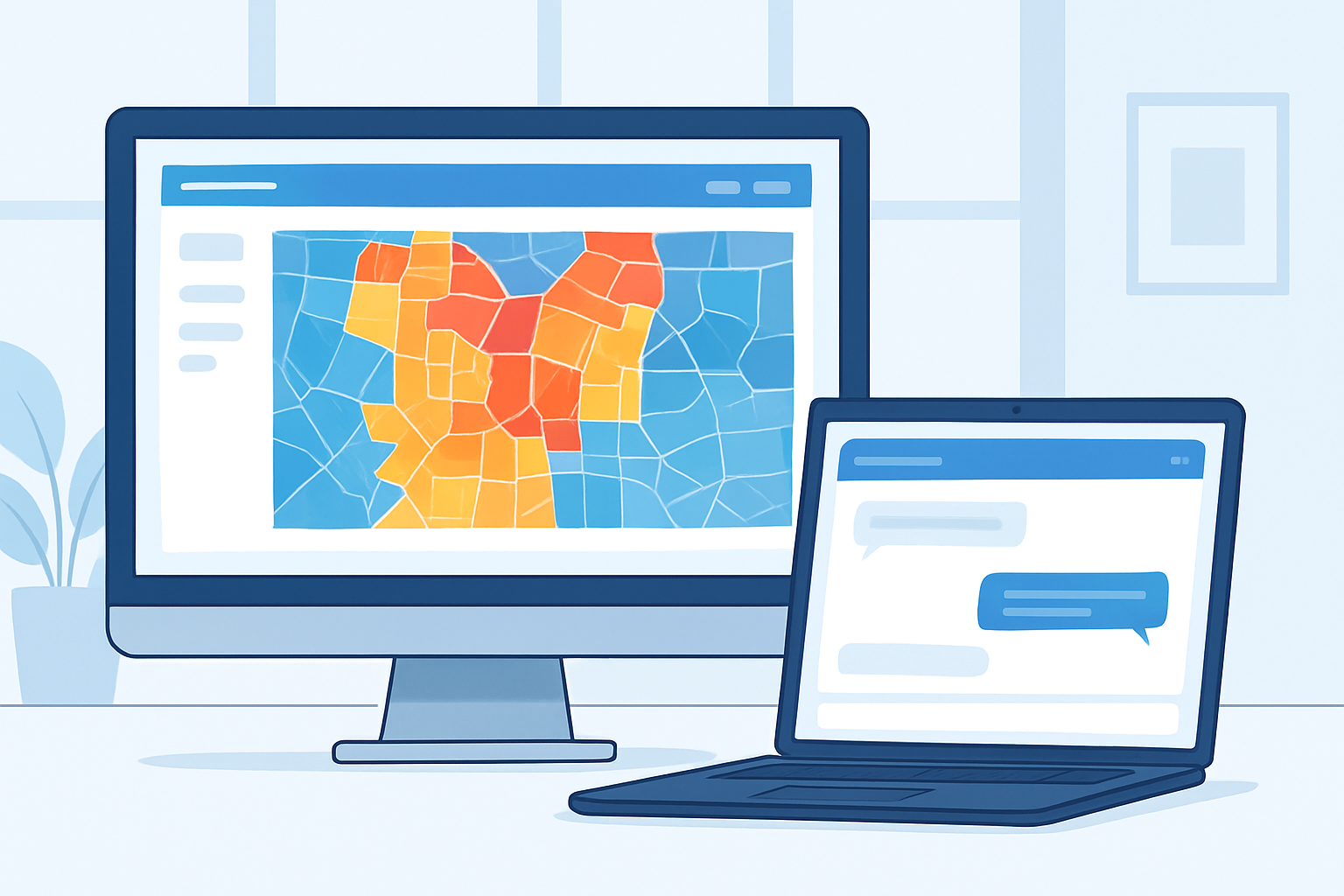
Pairing a seller-opportunity dashboard with AI-written follow-up content closes the gap ChatGPT leaves open.
Conclusion: Use ChatGPT for Writing, Not for Finding Sellers
In summary, ChatGPT for real estate agents is a genuinely useful tool for drafting listing descriptions, emails, and scripts faster than ever before. However, it cannot replace the research needed to find homeowners who are actually ready to sell, nor can it track engagement or automate a year-long nurture plan on its own. Therefore, the agents getting the most out of AI are the ones pairing it with real seller data, such as the scoring, contact information, and automated nurture available through SellScore Pro. Ultimately, AI can help an agent write faster, but a seller-intelligence platform is still what helps an agent know exactly where to point that writing.
