Circle prospecting is the practice of reaching out to homeowners who live near a recent sale, a new listing, or a property showing strong seller signals, instead of dialing through a random, stale lead list. For decades agents have driven neighborhoods and called around a "just listed" sign, and the approach still works because it puts agents in front of people who are already watching local market activity. Today, however, the best version of circle prospecting pairs that old instinct with real data on who is actually likely to sell.
This guide walks through what circle prospecting is, why it still outperforms blind cold calling, and how to run a campaign step by step. Along the way, it shows where tools like SellScore Pro replace guesswork with seller scoring, so the circle you work is actually worth working.

Circle prospecting works best when the circle is scored before the first call is made.
What Is Circle Prospecting?
Circle prospecting is a geographic lead generation method where an agent contacts homeowners within a defined radius of a trigger event, such as a nearby sale, a new listing, or a home showing strong seller activity. The goal is simple: reach people who already have a reason to think about their own home's value because something just happened on their street.
In contrast to blind cold calling, circle prospecting gives agents a natural conversation starter. Instead of asking a stranger if they want to sell, the agent can mention the nearby sale or new listing and ask what the homeowner has heard about it. That small shift in framing tends to lower resistance and open the door to a real conversation.
Why Neighborhood Prospecting Still Works in 2026
Neighborhood prospecting still works because most homeowners decide to sell long before they call an agent, and nearby activity is often the trigger that starts that thinking. According to research from the National Association of Realtors, a large share of sellers contact only one agent before listing, which means being first in front of a motivated homeowner matters more than ever.
Furthermore, housing turnover data from the U.S. Census Bureau shows that moves cluster around life events like job changes, family growth, and retirement, which tend to happen in waves within the same neighborhoods. As a result, a well-timed circle around one of these events often contains several other homeowners approaching similar decisions.
That said, the method has a weakness: it depends entirely on knowing which homes in the circle are actually close to selling. Without that filter, agents still end up calling mostly uninterested homeowners, which is exactly the focus problem that data-driven scoring is built to solve.
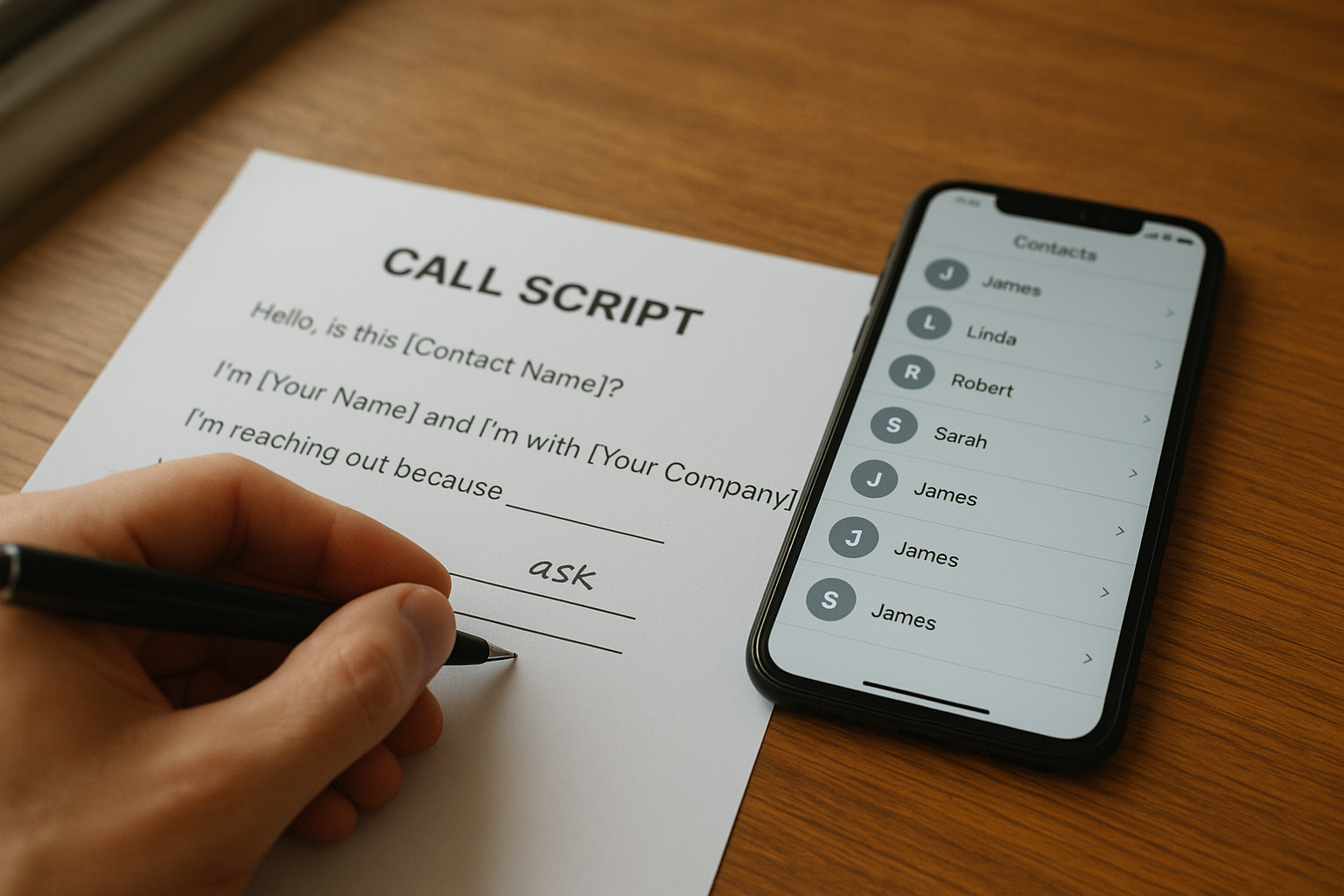
A short, natural script outperforms a long sales pitch in almost every circle prospecting call.
How to Run a Geographic Farming Campaign Step by Step
Running a tight geographic farming campaign around a trigger event does not require a large budget, but it does require a clear process. The following steps outline how to go from picking a radius to following up automatically.
- Choose your trigger event and radius. Pick a recent sale, new listing, or a home showing strong seller signals, then set a radius of roughly a quarter to half mile around it to keep the circle focused.
- Pull owner data and seller scores. Gather accurate names, phone numbers, and emails for every address in the circle, and prioritize the homes with the strongest seller signals first, rather than working the list in order.
- Segment the list by priority. Sort addresses into Hot, Warm, and Cold groups so the homeowners most likely to move get called before the ones who probably will not.
- Make contact with a simple script. Call, text, mail, or knock using a short, conversational script that references the nearby sale and invites the homeowner to share their own plans.
- Automate follow-up for non-responders. Enroll everyone who does not answer into an automated nurture sequence so they keep hearing from you for months instead of going cold after one try.
Notably, platforms like SellScore Pro combine steps two through five into one workflow. For a deeper look at building that initial target list, see this guide on how to find homeowners likely to sell soon.
Scripts That Turn Calls Into Listings
A good circle prospecting script is short, specific, and curious rather than pushy. For example: "Hi, this is [name] with [brokerage]. I just helped a family nearby on [street] sell their home, and I'm reaching out to a few neighbors to see if you've thought about what your home might be worth in today's market." This framing references real activity, asks a low-pressure question, and gives the homeowner an easy way to engage.
If the homeowner is not ready to talk, offering a free, no-obligation home value report keeps the door open without pressure. In fact, this is exactly the role a personal home value page plays: it gives curious homeowners a reason to share details an automated estimate would never know, such as a finished basement or a new roof.
Common Prospecting Mistakes to Avoid
Even experienced agents make avoidable errors when circle prospecting. Below are the mistakes that quietly waste the most time.
- Calling the whole circle blindly. Working every address with equal effort ignores the fact that only a fraction of homeowners are actually close to selling.
- Giving up after one call. Most homeowners do not answer the first time, so a single unanswered call should never end the relationship.
- Using a stiff, memorized pitch. Scripts should sound like a real conversation, not a reading.
- Ignoring engagement signals. A homeowner who opens every email or revisits a home value page is telling you something important; failing to notice means missing the moment to follow up.
How SellScore Pro Makes Circle Prospecting Smarter
SellScore Pro turns circle prospecting into a scored, repeatable process instead of a guessing game. Every property nationwide is scored Hot, Warm, or Cold based on seller signals, and the Heat Map shows exactly which homes around any listing or sale deserve a call first. For agents comparing full prospecting platforms, this overview of real estate prospecting software that finds sellers first breaks down how that scoring works in practice.
Once a circle is scored, Contact Find adds verified names, phone numbers, and emails so the list is ready to work immediately. Pro plans include 50 contact finds a month, while Pro+ doubles that to 100, which is usually enough to cover several circles around active listings in a given month.
Beyond the first call, every contact can be enrolled in 48 weekly nurture emails that run automatically for nearly a year, and engagement tracking shows exactly who opens, clicks, and revisits. As a result, agents stop guessing who is paying attention and start calling the homeowners the data says are warming up. Agents who want a side-by-side look at manual outreach versus a managed calling service may also find this comparison of real estate cold calling services worth it in 2026 useful before deciding how to staff their circle prospecting calls.
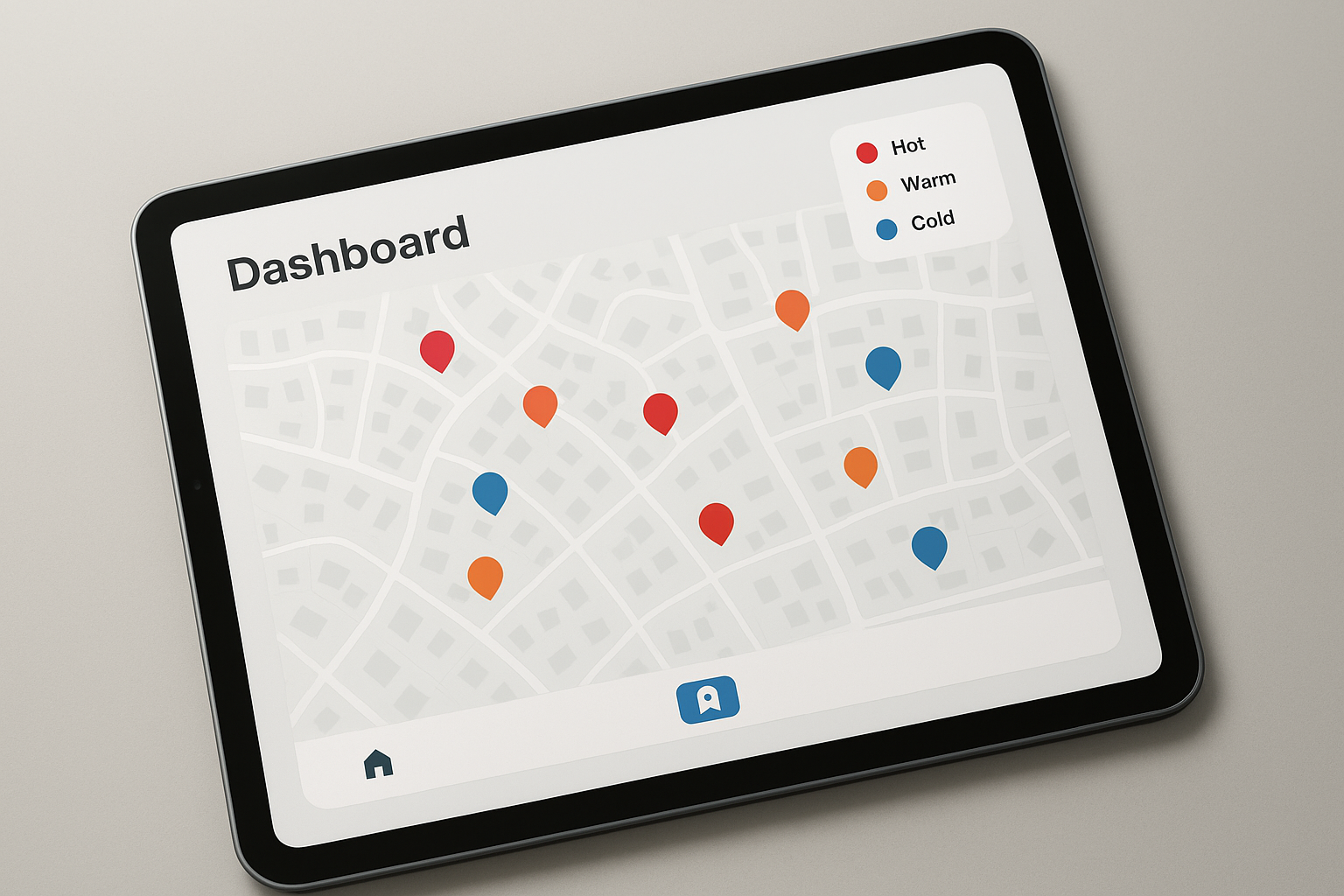
Scoring the circle first means fewer wasted calls and more conversations with real sellers.
Door-Knocking, Cold Calling, or Circle Dialing: What's the Difference?
Door-knocking, cold calling, and circle dialing are all delivery methods for the same underlying strategy rather than separate strategies on their own. Door-knocking means showing up in person, cold calling means dialing a general list with no connection to the homeowner, and circle dialing specifically means calling homes within a geographic radius of a trigger event.
In contrast to pure cold calling, circle dialing gives the agent a reason for the call, which tends to improve answer rates and reduce the awkwardness of the opening line. Similarly, door-knocking within a scored circle is far more productive than knocking randomly, because the agent already knows which homes are more likely to be receptive. For a broader view of how this fits into a full lead strategy, see this overview of a seller lead intelligence platform for agents in 2026.
Frequently Asked Questions About Circle Prospecting
What is circle prospecting in real estate?
Circle prospecting is a method where agents contact homeowners in a specific area around a new listing, recent sale, or seller-signal property instead of calling random leads. It lets agents focus on a geographic zone where buying and selling activity is already happening.
How is circle prospecting different from geographic farming?
Geographic farming is a long-term strategy of consistently marketing to one neighborhood over months or years to build brand recognition. Circle prospecting is a short-term, event-triggered version of farming, launched around a specific sale, listing, or data signal.
How many homes should I include in a circle prospecting campaign?
Most agents start with 50 to 150 homes within a half-mile radius of the trigger property. A smaller, highly scored circle usually converts better than a large, unfiltered one.
What is a good circle prospecting script opener?
A simple opener works best: introduce yourself, mention the nearby sale or activity, and ask a low-pressure question about the homeowner's plans. For example, agents might say they just listed or sold a home nearby and are curious if the homeowner has thought about their own home's value.
How much does circle prospecting cost?
Traditional circle prospecting is nearly free if you already have a phone and a list, though time is the real cost. Tools that add owner contacts, seller scoring, and automated nurture, such as SellScore Pro, typically run about $99 to $149 a month.
How long does it take to see results from circle prospecting?
Some agents get a callback or appointment within the first week, but most listings from circle prospecting close within 60 to 120 days. Consistency matters more than any single call session.
Is circle prospecting still effective in 2026?
Yes, circle prospecting remains effective because it targets homeowners near real market activity instead of cold, unrelated lists. Pairing it with seller-signal data makes it significantly more efficient than traditional blind dialing.
What is the best time of day to circle prospect?
Weekday mornings between 9 and 11 a.m. and early evenings between 5 and 7 p.m. tend to get the highest answer rates. Testing your own list against local time zones is still recommended.
Can I circle prospect without cold calling?
Yes, circle prospecting can be done through direct mail, door knocking, email, or digital ads instead of phone calls. Many agents combine a soft digital touch, like a home value page, with a follow-up call for better response rates.
What is the biggest mistake agents make with circle prospecting?
The most common mistake is calling every home in a radius without any seller-signal filtering, which wastes time on homeowners who have no plans to move. Scoring the circle first dramatically improves conversion.
How does SellScore Pro improve circle prospecting results?
SellScore Pro scores every home in a circle as Hot, Warm, or Cold based on seller signals, then adds verified owner contacts so agents call the right homes first. It also nurtures every contact automatically for nearly a year through 48 weekly emails.
What is the difference between circle prospecting and door knocking?
Circle prospecting is the overall strategy of targeting homes around a trigger event, while door knocking is just one delivery method for that strategy. Phone calls, mailers, and digital outreach are other delivery methods within the same circle prospecting approach.
Key Takeaways
Circle prospecting is still one of the most reliable ways to find real sellers, but only when the circle is built around real signals instead of a random radius. Above all, scoring the homes in your circle before you call saves hours of wasted effort and puts your first conversation in front of the homeowner most likely to actually list.
Agents who want to replace guesswork with a scored, nationwide system can see how the process works end to end by exploring SellScore Pro, or jump straight into a $1 trial account to score a circle today.
