Real estate dialers are built to help agents make more calls in less time, but speed alone rarely turns a stranger into a seller. If you have ever wondered whether a dialer is the missing piece in your prospecting routine, you are asking a fair question. In fact, agents who already use a real estate dialer often say the real challenge is not dialing fast enough, it is knowing who to call first. This article explains what real estate dialers do, where they fall short on their own, and how pairing a dialer with seller-signal data changes the math on every calling session.
Quick answer: Real estate dialers speed up the mechanics of calling, but they do not tell an agent who is actually ready to sell. Pairing a dialer with verified, seller-signal-ranked contacts turns the same calling hour into far more qualified conversations.

Real estate dialers work best when paired with a ranked, verified calling list.
What Are Real Estate Dialers?
Real estate dialers are software platforms that automatically or semi-automatically call numbers from an agent's prospecting list and connect the agent once a live person answers. Instead of manually dialing, waiting, and hanging up on voicemail after voicemail, the software handles that repetitive work. As a result, agents can often fit noticeably more live conversations into the same hour.
There are three common types. A preview dialer shows the next contact's details before calling, which keeps things manual but organized. A power dialer calls one number at a time and connects the agent the moment someone answers. A predictive dialer, as described on Wikipedia, calls multiple numbers simultaneously using an algorithm, which boosts talk time but occasionally causes a brief silence before the agent joins the line.
Because dialers place automated or rapid-succession calls, compliance matters. The Federal Communications Commission enforces rules under the Telephone Consumer Protection Act that govern how dialers can be used for outbound sales calls, including Do Not Call list checks. Agents considering any real estate dialer should confirm their provider handles this compliance correctly before a campaign goes live.
How Do Power, Predictive, and Preview Dialers Compare?
Choosing between dialer types mostly comes down to volume versus control. Preview and power dialers keep every call manual and compliant, which suits smaller daily lists. Predictive dialers increase raw talk time for teams making hundreds of calls a day, but they add legal complexity and can feel impersonal when a homeowner picks up to dead air.
For a deeper side-by-side breakdown of specific tools, our guide to the best dialer for real estate agents compares features, pricing, and compliance handling across the most common options in 2026. Similarly, our review of whether an auto dialer for real estate agents is worth the monthly cost walks through the return on investment question in more detail.
Real Estate Dialers and the Focus Problem
Here is the uncomfortable truth: most agents do not have a lead problem, they have a focus problem. A faster dialer just means an agent can burn through a bad list faster. Specifically, farming a neighborhood blindly or chasing the same expired listings every other agent in town is already calling does not become smarter simply because the calls happen quicker.
According to the National Association of Realtors' annual Profile of Home Buyers and Sellers, the large majority of sellers end up listing with an agent rather than selling on their own, which means the opportunity is real. The challenge is finding that seller before a sign appears in someone else's yard. For agents weighing whether paid calling services solve this, our breakdown of real estate cold calling services covers the tradeoffs of outsourcing versus dialing a targeted list yourself.
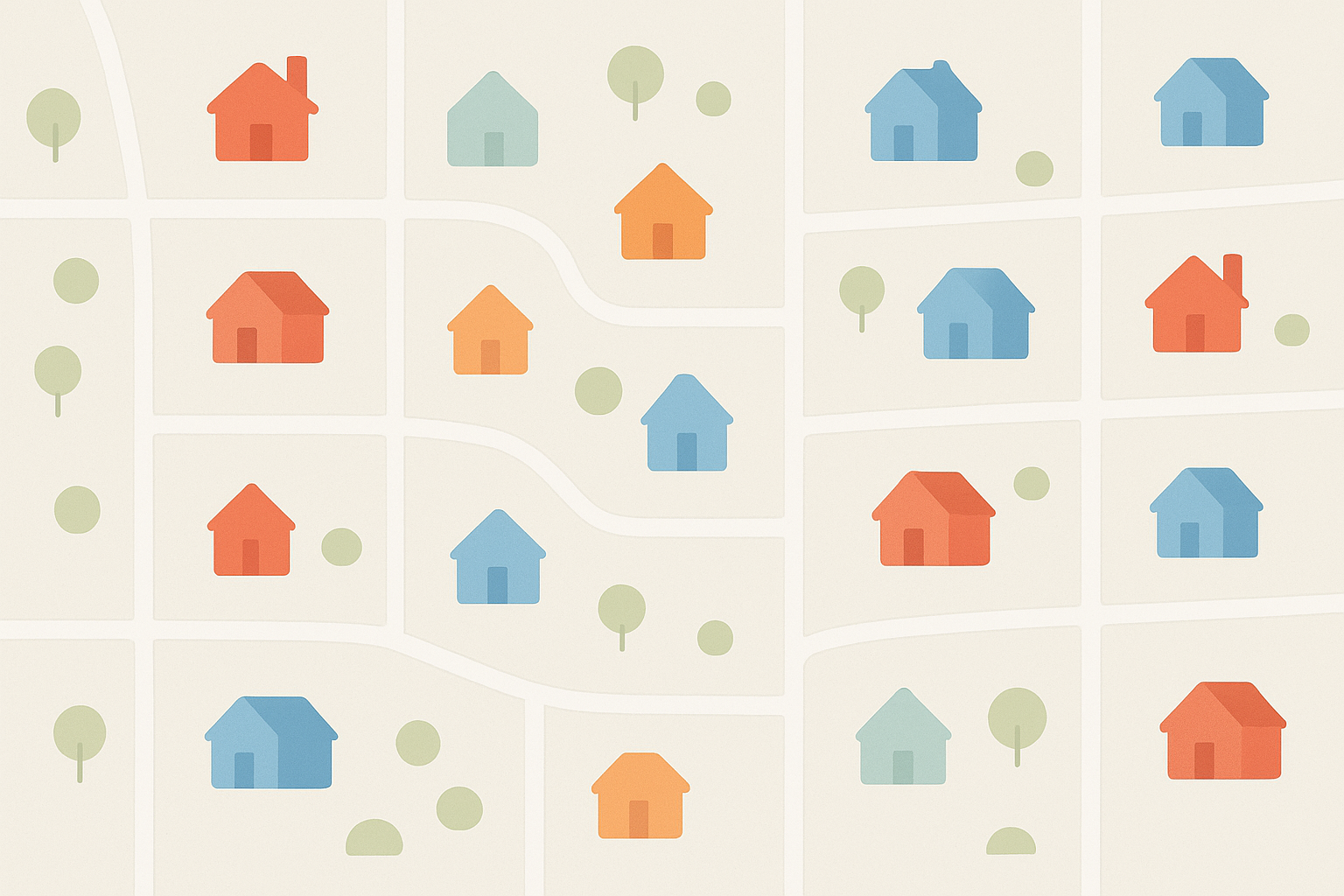
Seller-signal mapping helps agents decide which homes deserve a call today.
How Seller Scoring Changes the Math
This is where seller-signal scoring changes everything about a calling session. Instead of guessing, a platform like SellScore Pro scores homes across all 50 states as Hot, Warm, or Cold based on property and market signals, then surfaces verified owner names, phone numbers, and emails through its Contact Find tool. Consequently, the list loaded into a dialer is no longer a random farm, it is a ranked set of homeowners already showing signs of moving toward a sale.
Beyond the call itself, every contact also triggers 48 weekly nurture emails over nearly a year, plus engagement tracking that shows opens, clicks, and report activity. In other words, a missed call today does not end the relationship. Agents can see exactly who is paying attention and call back when interest, not luck, points them there.
How to Combine a Real Estate Dialer With Seller Scoring
Pairing a dialer with ranked data only works if the workflow is consistent. The following sequence gives agents a repeatable process rather than a one-time experiment.
- Pull your highest-signal list first. Before opening the dialer, sort your prospecting pool by seller signal strength and export only the Hot and Warm homeowners instead of an entire neighborhood farm.
- Load verified contacts into your dialer. Import names, phone numbers, and emails for that filtered list into your real estate dialer so every number connected to a call belongs to a prioritized homeowner.
- Script around the signal, not a cold open. Reference the actual reason the homeowner was flagged, such as recent neighborhood activity or home value interest, instead of reciting a generic market-update script.
- Log outcomes and let nurture work the rest. Mark every call outcome and allow automated nurture emails to continue reaching homeowners who did not answer, so the relationship keeps building between dialing sessions.
- Review engagement weekly and re-prioritize. Check who opened emails, clicked links, or revisited a value report each week, then move those engaged homeowners to the top of next week's dialer list.
What Real Estate Dialers Cost vs What They Return
Most standalone real estate dialers run roughly 100 to 400 dollars a month per seat, and that is before adding a separate CRM, a lead list subscription, and presentation software. Meanwhile, referral platforms that hand agents a lead typically take 25 to 40 percent of the resulting commission, which can outweigh months of dialer fees on a single closed sale.
By comparison, SellScore Pro bundles nationwide seller scoring, verified contacts, nurture, engagement tracking, and an AI-powered CMA builder for about 3.30 dollars a day, with no referral fees or long contracts. Therefore, the real cost comparison is not dialer versus no dialer, it is paying away commission for leads versus owning a prioritized pipeline the agent keeps calling for free.

Daily cost matters less than how many qualified calls a list actually produces.
Common Mistakes Agents Make With Real Estate Dialers
The most frequent mistake is loading an unfiltered list and treating every number as equally worth a call. This burns hours on homeowners with no intent to sell while the handful of genuinely motivated sellers get the same generic script as everyone else on the block. A second mistake is abandoning a contact after one unanswered call, instead of letting automated nurture continue the relationship for months.
Finally, many agents skip the marketing side entirely. Pairing dialer calls with a broader outreach plan, such as the ideas covered in our guide to unique real estate marketing ideas that win listings, gives homeowners more than one reason to recognize an agent's name before the phone even rings.
Frequently Asked Questions About Real Estate Dialers
What is a real estate dialer?
A real estate dialer is software that automatically or semi-automatically calls numbers from a prospecting list and connects the agent once a person picks up. It is built to reduce the manual time spent dialing, pausing, and leaving voicemails between calls.
How do real estate dialers help agents get more listings?
Real estate dialers help by cutting the idle time between calls, so agents can reach more people in the same hour. However, more conversations only turn into listings if the list being dialed actually contains homeowners who are likely to sell soon.
Are real estate dialers legal under TCPA rules?
Dialers can be used legally, but agents must follow the Telephone Consumer Protection Act and check numbers against the National Do Not Call Registry before auto-dialing. Rules differ for manual calls versus automated or predictive dialing, so it is worth confirming compliance settings with your provider.
What is the difference between a power dialer and a predictive dialer?
A power dialer calls one number at a time and connects the agent as soon as someone answers, which keeps compliance simple. A predictive dialer calls several numbers at once using an algorithm, which increases talk time but adds legal complexity and occasional dead air.
How much do real estate dialers cost?
Most standalone real estate dialers run somewhere between 100 and 400 dollars a month per seat, depending on call volume and features. That cost is separate from the lead lists, CRM, and presentation tools many agents still pay for on top of it.
How long does it take to see results from cold calling with a dialer?
Most agents need several weeks of consistent daily calling before appointments become predictable, since cold calling relies on repetition and timing. Results arrive faster when the list is filtered to homeowners already showing seller signals instead of a random neighborhood farm.
What is the most common mistake agents make when using a dialer?
The most common mistake is loading an unfiltered list and treating every number as equally worth calling. This burns hours on homeowners with no intent to sell while a handful of genuinely motivated sellers get the same generic script as everyone else.
Can a real estate dialer replace a CRM?
A dialer and a CRM solve different problems, so one rarely replaces the other. The dialer speeds up the calling mechanics, while the CRM tracks relationships, follow-up timing, and long-term nurture across months or years.
Do real estate dialers work for expired listings and FSBOs?
Yes, dialers work fine for expired listings and FSBOs, but those lists are crowded because every agent in town is calling the same names. Real estate dialers perform best when paired with a less competitive source, such as homeowners flagged by seller-signal scoring before a listing ever hits the market.
What is seller signal scoring and how does it work with a dialer?
Seller signal scoring analyzes property, ownership, and market data to flag homeowners who show patterns consistent with selling soon, ranking them as Hot, Warm, or Cold. Feeding those ranked, verified contacts into a dialer means every call targets someone with a higher chance of actually listing.
Is it better to buy more leads or call a smaller, smarter list?
A smaller, smarter list almost always outperforms a larger generic one, because conversion depends on timing and intent, not volume alone. Calling 50 homeowners with strong seller signals typically beats calling 500 random numbers from an old expired list.
How does SellScore Pro work with a real estate dialer?
SellScore Pro scores homes nationwide as Hot, Warm, or Cold and supplies verified owner names, phone numbers, and emails through Contact Find. Agents export that prioritized, verified list into whichever real estate dialer they already use, so every dial targets a homeowner with a documented seller signal instead of a cold guess.
What should an agent say in the first ten seconds of a dialer call?
The first ten seconds should reference a specific, relevant reason for the call rather than a generic market update. Mentioning a known signal, such as recent activity around their home value or neighborhood sales, makes the call feel earned instead of random.
Final Thoughts on Real Estate Dialers
Real estate dialers remain a genuinely useful tool for cutting manual dialing time, and they are not going away. However, a faster dialer only multiplies whatever list goes into it, for better or worse. As a result, the agents winning the most listings in 2026 are not necessarily the ones dialing the fastest, they are the ones calling the right homeowners first.
In short, pairing a real estate dialer with verified, seller-signal-ranked contacts, automated nurture, and engagement tracking turns a generic calling session into a focused one. Platforms like SellScore Pro, available in both English and Spanish, exist to find those opportunities so agents can spend their time working them instead of guessing where to start.
