Real intent is the clearest signal a real estate agent can find: proof that a homeowner is genuinely preparing to sell, not just curious about what their house is worth today. Learning to separate real intent from casual browsing is, in fact, the single biggest lever agents have for winning more listings without burning out on cold outreach. This article breaks down what real intent looks like, how to spot it, and how a nationwide seller-intelligence platform such as SellScore Pro turns those signals into a working pipeline.
Direct answer: Real intent is a homeowner's demonstrated, ongoing behavior that points toward an actual decision to sell, such as repeated visits to a home value page, engaging with a CMA, or opening several nurture emails in a row. Unlike a single click or an outdated "hot lead" label, real intent is confirmed over time through patterns, not guesses.

A daily view of real intent signals helps agents decide who to contact first.
What Is Real Intent in Real Estate?
Real intent is the behavior and data pattern that shows a homeowner is likely moving toward a listing decision, rather than idly checking a number online. It combines property and market signals, such as equity position or time in the home, with active engagement signals, such as revisiting a home value page or opening several emails in a row.
In contrast, a low-intent signal is a single, isolated action. Someone who clicks one search result once and never returns is showing curiosity, not real intent. Agents who treat every click the same way end up spreading their time across mostly cold contacts, which is exactly why prospecting can feel inefficient even when lead volume looks healthy.
Why Seller Signals Matter More Than Lead Volume
Most agents do not actually have a lead problem; they have a focus problem. Farming a neighborhood blindly or calling through a stale list means spending equal time on homeowners who were never going to sell and homeowners who are quietly getting ready to list.
According to the National Association of REALTORS®, the typical homeowner stays in a home for roughly a decade before selling, which means true seller-ready moments are relatively rare and easy to miss without data-driven prioritization. That is why sorting properties into Hot, Warm, and Cold tiers based on seller signals, rather than treating every address the same, makes a measurable difference in how agents spend their limited prospecting hours. For more background on how agents traditionally evaluate a property's market position, the Wikipedia overview of comparative market analysis is a useful primer.
Buying leads from referral platforms often makes this focus problem worse. Those platforms frequently take 25 to 40 percent of the resulting commission, lock agents into contracts, and hand the same homeowner to several competing agents at once. Instead of owning a pipeline, agents end up renting one.

A heat map turns scattered seller signals into a clear prospecting priority.
How to Identify Real Intent to Sell
Spotting genuine selling intent is a process, not a single lookup. Above all, it works best when property data and homeowner behavior are combined rather than treated separately. The following steps outline a practical sequence agents can follow.
- Score every property for seller signals. Run addresses in a target area through a scoring tool that labels each one Hot, Warm, or Cold, so effort naturally goes toward the strongest opportunities first.
- Get verified owner contact information. A score is only useful if there is a way to reach the person behind it, so add verified names, phone numbers, and emails to the highest-priority properties.
- Attract sellers with a personal home value page. Because online estimates often disagree by tens of thousands of dollars on the same house, giving homeowners a place to add upgrades and photos invites them to reveal real intent themselves.
- Nurture automatically for nearly a year. Enroll every contact in a long-running email sequence so the relationship keeps moving even when a homeowner is not ready today.
- Track real engagement instead of guessing. Monitor opens, clicks, and repeat visits so attention naturally shifts toward whoever is actually paying attention.
- Start the conversation with a Wealth Report. Use a professional, homeowner-facing report to open a real dialogue rather than a cold pitch.
Real Intent vs. Cold Leads and Expired Listings
Expired listings and FSBOs get chased by every agent in town, which means genuine selling intent there is often already spoken for. Cold lists, similarly, mix a small number of ready sellers in with a large number of homeowners who have no near-term plans at all.
In contrast, engagement-based signals reveal something a static list cannot: whether a specific homeowner is actively paying attention right now. A homeowner who revisits a home value page three times in two weeks is showing a different level of readiness than one who appears only because their address matched a farm area.
Consequently, the smartest use of prospecting time is not more volume, but better sorting. Agents who can see engagement, not just addresses, spend fewer hours per closed listing.
Common Mistakes Agents Make When Reading Intent Signals
One common mistake is treating a single click, like an ad view, as proof of real intent. In reality, that is only curiosity until it repeats. Another mistake is giving up after one unanswered call instead of letting an automated nurture sequence keep the door open for months.
Agents also sometimes ignore engagement data entirely and rely on gut feeling about who "seems ready." However, tracking actual opens, clicks, and report activity removes most of that guesswork and lets the data speak first.
How SellScore Pro Tracks Real Intent Nationwide
SellScore Pro was built by real estate brokers specifically to solve the focus problem described above. It scores eligible residential properties across all 50 U.S. states, using state, county, and ZIP-level market data to label each one Hot, Warm, or Cold.
From there, Contact Find adds verified names, phone numbers, and emails, with Pro including 50 contacts every month and Pro+ doubling that to 100. A Personal Home Value Page then invites homeowners to add upgrade details and photos, which turns anonymous curiosity into a documented, real intent signal the agent can see.
Once a homeowner is identified, a 48-week automated nurture sequence keeps the relationship moving, while engagement tracking shows email opens, clicks, and report activity in one place. The whole system, including the AI-powered CMA builder, Marketing Hub, daily priorities, AI Coach, and Training Academy, runs for about $3.30 a day with no referral fees, commission splits, or long-term contracts. Full details on plans are available on the SellScore Pro pricing page, and Spanish-speaking agents can review the same plans on the Spanish pricing page.
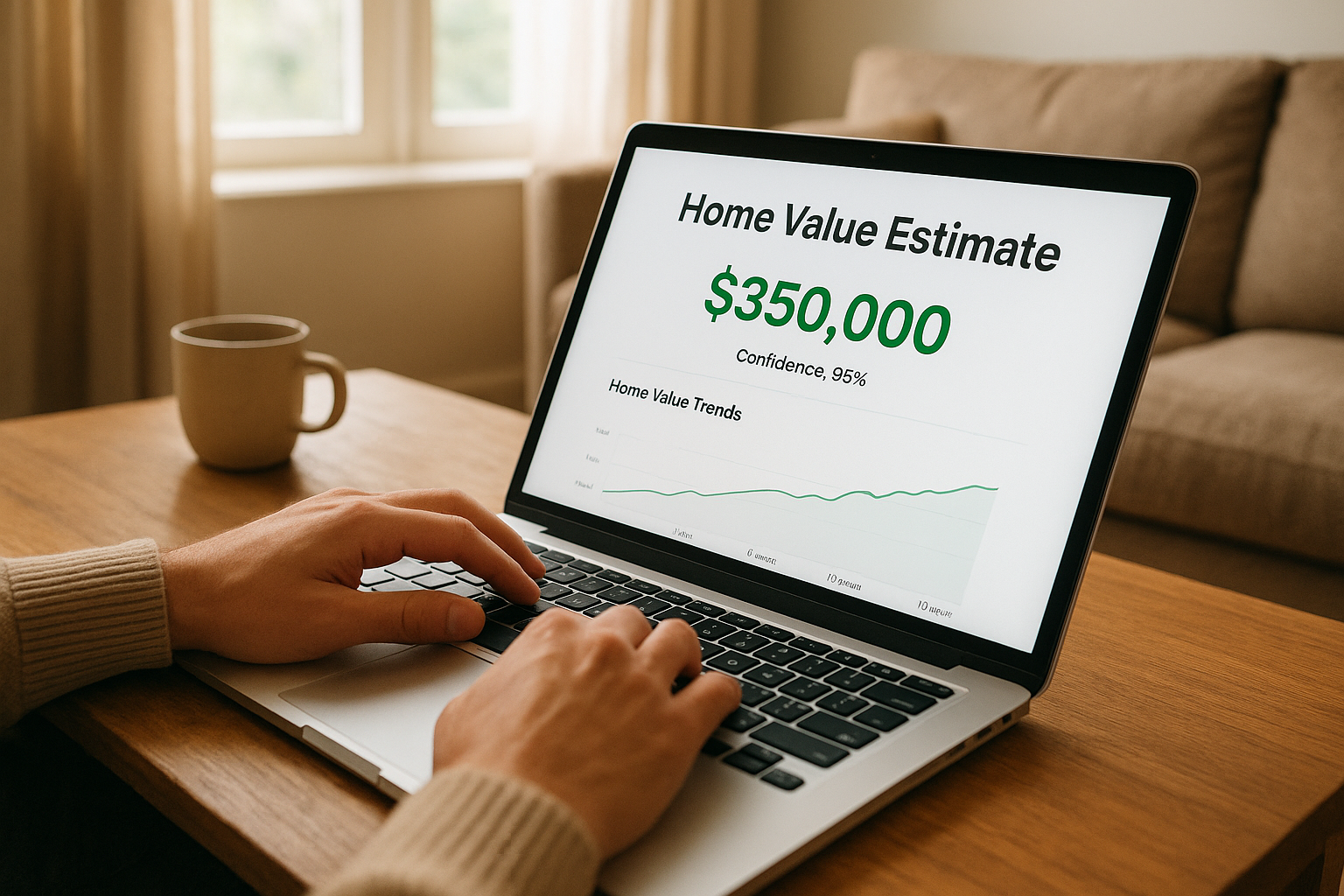
A home value page gives homeowners a natural reason to reveal real intent on their own terms.
Where the Data Comes From
Because seller-signal scoring depends on housing market conditions, it is worth understanding where the underlying numbers originate. Public housing data, such as the vacancy and homeownership figures published by the U.S. Census Bureau, feeds into the broader market context that scoring models use alongside property-level details.
Agents who want a plain-language overview of how real estate professionals interpret this kind of data can also review the National Association of REALTORS® research library, which regularly publishes seller and buyer behavior reports. It is worth noting that scores, estimates, and reports generated by any platform are informational tools, not an appraisal, legal advice, or a guarantee of a transaction.
SellScore Pro's own privacy and data use page explains how homeowner and property data is handled, which is a useful read for agents evaluating any seller-intelligence tool. Spanish-speaking agents with questions can also reach the team through the Spanish contact page.
Frequently Asked Questions About Real Intent
What does real intent mean when selling a home?
Real intent means a homeowner is showing genuine, measurable behavior that points toward selling soon, rather than casual curiosity about their home's value. It shows up in patterns like repeated visits to a home value page or engagement with a CMA, not a single anonymous search.
How can agents tell if a homeowner has real intent to sell?
Agents look for a pattern of behavior rather than one action, such as repeat visits to a home value tool or opening several nurture emails in a row. Tracking tools that log opens, clicks, and report engagement make these patterns visible instead of guessed at.
Why do most seller leads never convert into listings?
Most seller leads never convert because they were never truly ready to sell in the first place; they were simply curious. Agents who chase every lead the same way waste time on low-intent homeowners instead of prioritizing the ones actually preparing to list.
What is the difference between real intent and a hot lead?
A hot lead label is often based on a single action, like clicking one ad, while real intent is confirmed through ongoing engagement over days or weeks. Real intent is the more reliable signal because it reflects sustained interest rather than a momentary click.
How much does it cost to identify real intent nationwide with SellScore Pro?
SellScore Pro costs about $3.30 a day, starting with a 3-day trial for $1 before renewing at $99 a month for Pro or $149 a month for Pro+. There are no referral fees, commission splits, or long-term contracts, and agents can cancel anytime from Subscription Management.
How long does it take to start seeing real intent signals after signing up?
Seller scoring, the Heat Map, and Contact Find are available as soon as an account is active, so agents can review Hot, Warm, and Cold signals within minutes. Deeper engagement signals, like repeat page visits, build over the following days and weeks as nurture emails go out.
What mistakes do agents make when chasing real intent signals?
The most common mistake is treating every contact the same way instead of prioritizing homeowners showing the strongest signals first. Another mistake is giving up after one unanswered call instead of letting an automated nurture sequence keep the relationship warm.
What are best practices for nurturing sellers with real intent?
Best practice is to combine automated nurture, such as weekly emails over nearly a year, with engagement tracking so agents know exactly when to step in personally. Following up quickly after a spike in activity tends to produce the strongest response.
Can real intent be measured before a homeowner contacts an agent?
Yes, real intent can often be measured before any phone call happens, through property and market signals plus how a homeowner interacts with tools like a home value page. This lets agents prioritize outreach based on data instead of waiting for an inbound call.
Is real intent the same in every state?
The underlying idea of real intent is consistent everywhere, but the specific signals can vary by local market conditions, county, and even ZIP code. Nationwide seller-scoring tools account for these differences by pulling state, county, and ZIP-level market data into each score.
Does buying leads from referral platforms show real intent?
Not necessarily; many referral platforms sell the same lead to multiple agents and take 25 to 40 percent of the eventual commission, regardless of how genuine the homeowner's intent is. Agents who own their prospecting data can filter for real intent themselves instead of paying for an unverified lead.
How does a heat map relate to real intent?
A heat map visually ranks nearby properties as Hot, Warm, or Cold based on seller signals, giving agents a starting point before they dig into individual homeowner engagement. Combined with contact data and engagement tracking, it turns a broad area into a short list of homeowners worth prioritizing first.
Key Takeaways on Real Intent
In summary, real intent is what separates a homeowner who is genuinely preparing to sell from one who is simply curious. Instead of chasing every lead with equal effort, agents get better results by scoring properties, verifying contact information, inviting homeowners to share upgrade details, and tracking who keeps engaging over time.
Ultimately, the agents who consistently win more listings are not the ones calling the most people. They are the ones who can tell the difference between casual interest and real intent, and who follow up at the right moment because they can actually see that difference in the data. Platforms like SellScore Pro exist to make that difference visible, one homeowner at a time.
