Automated follow up for real estate seller leads is the single biggest fix most listing agents can make this year, because a cold lead today is often a signed listing six months from now if someone keeps the relationship warm. Instead of relying on memory or sticky notes, agents who automate this process stay in front of homeowners for months without lifting a finger for every touch. This guide breaks down what automated follow up actually means, how it works step by step, and how a platform like SellScore Pro applies it to seller leads across all 50 states.
Direct answer: Automated follow up for real estate seller leads uses scheduled emails, texts, and engagement tracking to stay in contact with potential sellers for months after the first touch, without requiring an agent to remember every follow-up manually.
What Is Automated Follow Up for Real Estate Seller Leads?
Automated follow up for real estate seller leads is a system, usually software-based, that sends scheduled messages and tracks a homeowner's activity over time instead of depending on an agent's memory. For example, a lead captured in January might receive a weekly email for nearly a year without the agent lifting a finger after setup.
In practice, this looks like a sequence of emails, sometimes paired with texts, combined with alerts that tell the agent when a homeowner opens a message or revisits a report. Consequently, the agent spends less time chasing and more time talking to people who are already showing interest. Because the system runs in the background, even a packed showing schedule does not break the chain of contact.
Why Manual Seller Lead Follow-Up Falls Apart
Most agents do not actually have a lead problem; they have a focus problem. They farm neighborhoods blindly, call through stale lists, and chase expireds alongside every other agent in town. Meanwhile, the homeowners quietly getting ready to list go unnoticed until a competitor's sign appears in the yard.
In addition, manual follow-up tends to die after one or two unanswered calls, simply because there is no system forcing the next touch to happen. According to the National Association of Realtors, most home sellers contact only a single agent before listing, which means the agent who stays visible the longest often wins the listing by default. Therefore, consistency matters more than any single clever pitch.
Buying referral leads does not solve this either. Referral platforms frequently take 25 to 40 percent of the resulting commission, lock agents into contracts, and hand the same lead to multiple agents simultaneously. As a result, agents end up renting their pipeline instead of owning it. For a deeper look at sourcing better opportunities in the first place, see this 2026 prospecting guide for listing leads.

Automated follow up for real estate seller leads lets agents focus on warm opportunities instead of cold lists.
How Automated Seller Nurture Works: A Step-by-Step Process
Specifically, a complete automated nurture workflow follows a predictable sequence. Below is the process most seller-intelligence platforms, including SellScore Pro, rely on.
- Score and identify seller signals. Property and market data get analyzed to flag homes showing hot, warm, or cold seller signals before any sign appears in the yard.
- Capture verified contact details. Names, phone numbers, and emails get attached to the flagged property so outreach actually reaches a real decision maker rather than a disconnected number.
- Enroll the contact in a nurture sequence. The lead is loaded into a scheduled email sequence, often running weekly for close to a year, so the relationship continues through busy seasons.
- Track engagement signals. Email opens, link clicks, and report views get logged, turning silence into visible interest the agent can act on.
- Personalize the next touch. Engagement data tells the agent exactly when to call, send a CMA, or drop off a printed report instead of guessing.
What to Look for in a Seller Lead Nurture Platform
Not every CRM is built for listing agents specifically, so comparing features side by side helps avoid paying for tools that do not fit the workflow. Below is a simple comparison of what matters most.
| Feature | Why It Matters |
|---|---|
| Seller signal scoring | Prioritizes which homeowners deserve attention first |
| Contact lookup | Turns an address into a name, phone number, and email |
| Automated nurture length | Longer sequences match longer seller decision timelines |
| Engagement tracking | Reveals who is actually paying attention right now |
SellScore Pro combines all four of these inside one subscription, alongside a personal home value page that gives homeowners a reason to engage first. For agents comparing multiple options, this seller lead software comparison and this Homebot alternative breakdown cover how different platforms, including Homebot, stack up on nurture and reporting features.
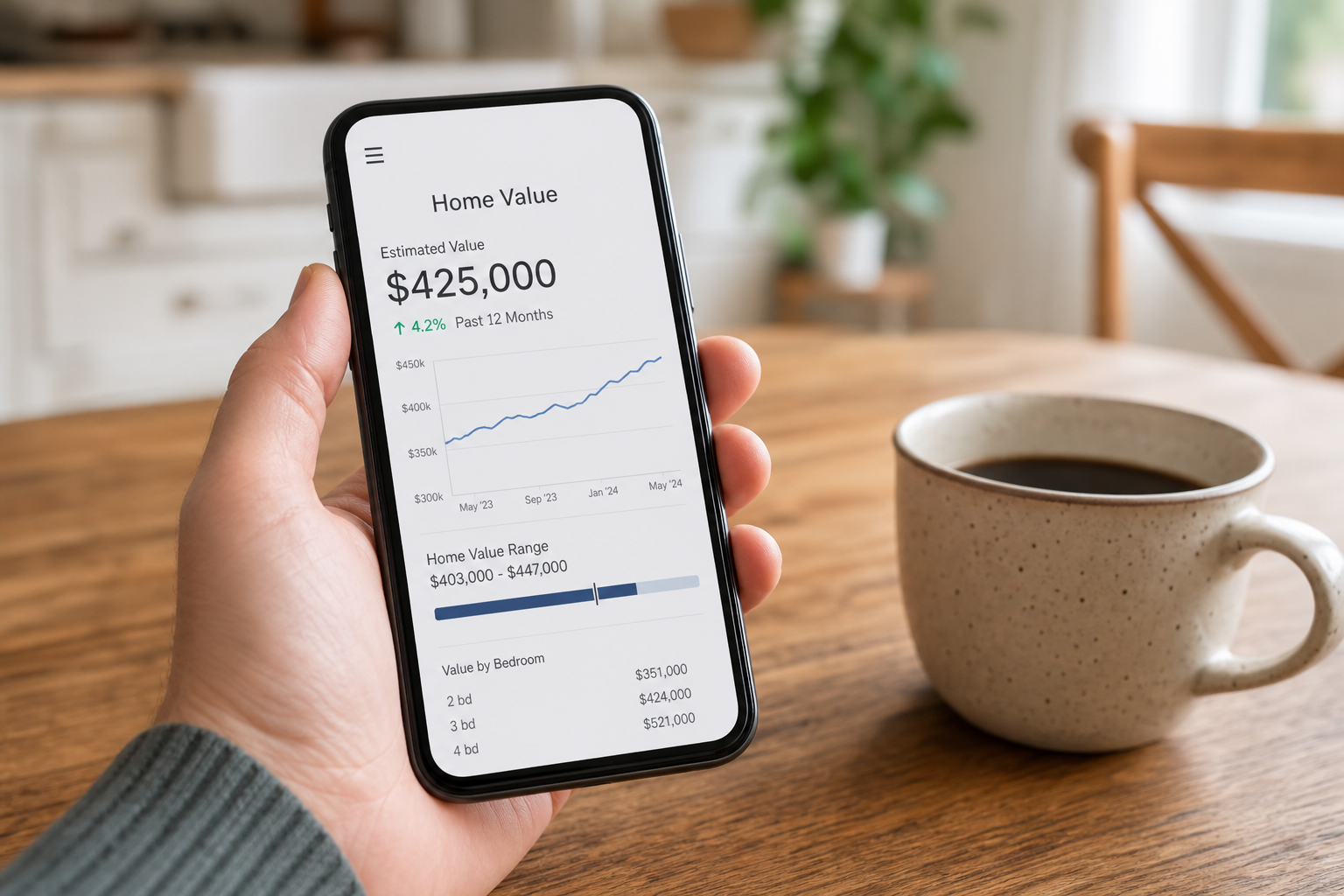
Engagement tracking turns a quiet homeowner click into a visible seller signal.
Automated Follow Up for Real Estate Seller Leads vs. Buying Referral Leads
On one hand, referral platforms promise instant leads but typically take a large commission split and lock agents into contracts. On the other hand, automated follow up for real estate seller leads built on owned data lets an agent keep the full commission while still maintaining consistent contact over time.
Furthermore, a referral lead is usually shared with several agents at once, so speed becomes the only differentiator. By contrast, an owned nurture sequence builds a relationship that referral platforms simply cannot replicate, because the homeowner only hears from one agent throughout the entire process.
Compliance Considerations for Automated Outreach
Email nurture generally carries fewer restrictions than automated calling or texting, which fall under stricter consent rules in the United States. Specifically, the Telemarketing Sales Rule enforced by the Federal Trade Commission and the Telephone Consumer Protection Act both affect how agents can use auto-dialers and bulk texting for prospecting.
Therefore, agents should always confirm consent before enrolling a contact in any automated calling or texting sequence, even if email nurture requires less friction. This auto-dialer compliance and ROI guide walks through the specific rules agents need to understand before adding phone-based automation on top of email nurture.

Consistent nurture often turns a quiet lead into a listed, then sold, property.
Common Mistakes Agents Make With Seller Lead Follow-Up
Even with good software, a few habits consistently undermine results. Above all, sending the exact same message to every contact regardless of their behavior wastes the value of engagement data entirely.
- Stopping the sequence too early, often right before the homeowner was ready to engage
- Ignoring engagement alerts and treating every contact the same way
- Skipping the personal home value page that gives the homeowner something worth clicking on
- Letting automation replace every human touch instead of pairing it with timely calls
A personal home value page often solves two of these problems at once by giving homeowners a reason to engage and giving the agent a trigger for the next personal touch. To learn more about how automated nurture ties into the rest of a listing strategy, visit SellScore Pro directly.
Frequently Asked Questions About Automated Follow Up for Real Estate Seller Leads
What is automated follow up for real estate seller leads?
Automated follow up for real estate seller leads is a system of scheduled emails, texts, and engagement alerts that keeps a potential seller warm for months without an agent manually tracking every touchpoint. It replaces sticky notes and spreadsheet reminders with software that runs on a set schedule.
How long should a seller lead nurture campaign run?
Most seller decisions take longer than agents expect, so a nine-month to one-year sequence outperforms a short burst of emails. A 48-week weekly cadence, for example, covers nearly a full year of consistent contact.
Why do most seller leads go cold before an agent reaches them?
Leads go cold mainly because agents rely on memory during busy weeks, and one missed call often ends the relationship entirely. Automated sequences remove that dependency by continuing contact even when the calendar is full.
What is the difference between automated nurture and a basic drip email campaign?
A basic drip campaign sends identical emails to everyone on a list, while true automated nurture combines scheduled outreach with engagement tracking and seller scoring. That extra layer tells the agent which homeowners are actually paying attention.
How much does automated seller lead software typically cost?
Pricing ranges widely, from free CRM add-ons to referral platforms that take 25 to 40 percent of a commission. Flat-fee platforms such as SellScore Pro run about $99 to $149 a month, roughly $3.30 a day, with no commission split.
Can automated follow-up completely replace phone calls?
No, automated follow-up keeps the relationship alive between calls rather than replacing human conversation. Its real purpose is surfacing engaged homeowners so a phone call lands at the right moment.
What is engagement tracking and why does it matter for seller leads?
Engagement tracking records when a homeowner opens an email, clicks a link, or revisits a value report, turning silence into visible interest. This matters because it lets agents prioritize outreach toward people who are warming up.
Is automated follow up for real estate seller leads compliant with calling and texting rules?
Email nurture generally carries fewer restrictions than automated calling or texting, which fall under stricter telemarketing and consent rules in the United States. Agents using automated texting or dialing should confirm consent requirements under the Telephone Consumer Protection Act first.
How do agents find seller leads worth putting into an automated nurture sequence?
Seller-signal scoring tools analyze property and market data to flag hot, warm, and cold homeowners before a sign ever goes in a yard. Pairing that with a contact lookup feature gives agents verified names, phone numbers, and emails to start the sequence.
What mistakes should agents avoid with automated seller lead follow-up?
The most common mistakes are sending identical messages to every contact, ignoring engagement data, and stopping the sequence too early. Agents should also avoid letting automation replace every personal touch.
How quickly should an agent respond after a seller shows a strong signal?
Responding within a day or two generally produces the best results, since interest fades quickly after a homeowner engages with a report or listing content. Automated alerts help agents notice that window instead of missing it entirely.
Does automated follow-up work for FSBO and expired listings too?
Yes, automated nurture applies just as well to for-sale-by-owner and expired listing contacts, who often need a longer runway before they trust an agent. Consistency can set an agent apart in a category where most competitors give up quickly.
What tools integrate automated follow-up with CMAs and listing presentations?
Platforms built specifically for listing agents often bundle automated nurture with AI-assisted CMA and presentation builders in one workflow. This keeps an agent from juggling separate lead lists, dialers, email tools, and presentation software.
Final Thoughts
In the end, automated follow up for real estate seller leads is less about fancy software and more about consistency over time. Most agents lose listings not because they lacked leads, but because they stopped following up before the homeowner was ready. Specifically, pairing seller signal scoring, verified contact data, and a nurture sequence that runs for months gives agents a durable edge without paying away commission or juggling five separate tools. Ultimately, the agents who stay visible the longest tend to win the listing, and automation makes that visibility possible even on the busiest weeks.

