Listing leads for realtors are the lifeblood of a growing real estate business, yet most agents still chase them the hard way: cold-calling expired listings, knocking on FSBO doors, and buying referral leads that get resold to two or three other agents at the same time. Instead of guessing where the next listing will come from, agents can now use seller-intelligence data to find homeowners who are already showing signs they are ready to sell. This guide breaks down what listing leads for realtors really means in 2026, how seller-scoring technology works, and how to build a steady pipeline without giving away a slice of every commission.
Quick answer: Listing leads for realtors are homeowners whose properties show a high likelihood of listing soon, identified through seller-signal scoring, public records, and engagement data rather than cold lists or expensive referral platforms. The most efficient approach combines predictive scoring with verified contact data and automated nurture, so agents work only the homeowners most likely to sell. Platforms such as SellScore Pro package this entire workflow into one subscription instead of a commission split.

Scoring technology turns scattered data into prioritized listing leads for realtors.
What Are Listing Leads for Realtors?
Listing leads for realtors are property owners who show measurable signals of being ready to sell within the next several months. Rather than treating every homeowner the same, seller-intelligence platforms rank properties by strength of signal, which lets an agent spend time where it counts most.
In practical terms, that means replacing a flat spreadsheet of addresses with a ranked list built from ownership tenure, equity position, market activity, and homeowner engagement. For example, a homeowner who visits a personal home value page twice in one month is sending a much stronger signal than a name pulled from a public tax record alone. Consequently, the agent who notices that activity first usually gets the conversation first.
Why Traditional Seller Lead Generation Falls Short
Most agents do not actually have a shortage of names. Instead, they have a focus problem: farming neighborhoods blindly, calling through stale lists, and chasing the same expireds and FSBOs as every other agent in town. Meanwhile, the homeowners who are quietly preparing to sell go unnoticed until a competitor's sign appears in the yard.
Buying leads from a referral network often makes this worse. According to industry pricing common across referral platforms, these services typically charge 25 to 40 percent of the commission on a closed deal, and the same contact is frequently distributed to several agents at once. As a result, agents end up renting their pipeline instead of owning it. Research from the National Association of Realtors consistently shows that the large majority of home sellers work with an agent, which underscores how much opportunity exists for agents who can reach sellers earlier in the process.
How Seller-Intelligence Scoring Finds Listing Leads for Realtors
Seller-intelligence scoring works by analyzing property and market data across an area and assigning each home a simple status: Hot, Warm, or Cold. Hot properties show the strongest combined seller signals, Warm properties deserve ongoing nurture and watching, and Cold properties feed a long-term pipeline for future outreach.
A Heat Map view then displays these scores visually around any address, so an agent can see at a glance where the strongest opportunities sit and spot activity that competitors might miss entirely. With more than 140 million housing units across the country, according to the U.S. Census Bureau, this kind of prioritization matters far more than simply having access to more names.
From Score to Signed Listing
Identifying the property is only the first move. Without a direct way to reach the owner, even a perfectly scored home is just a data point. That is why pairing scoring with verified contact information, such as names, phone numbers, and emails, matters as much as the score itself.
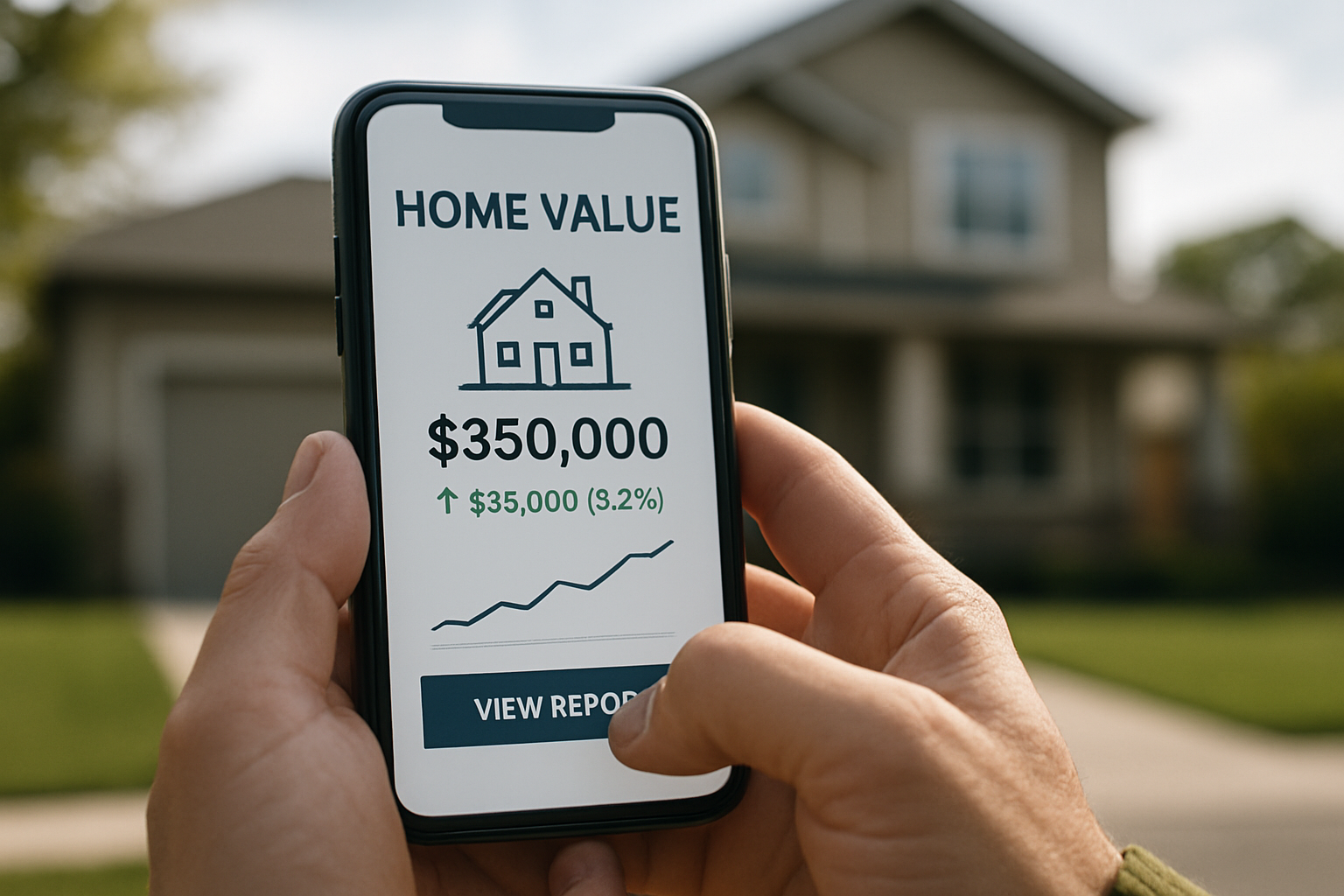
Personal home value pages invite homeowners to share details automated estimates miss.
A Step-by-Step Process to Turn Seller Signals Into Signed Listings
Converting a seller signal into a signed listing follows a repeatable sequence. Below is the process agents can apply whether they prospect manually or use a dedicated platform such as SellScore Pro to automate most of it.
- Score the properties. Review property and market signals across a target area and sort homes into Hot, Warm, or Cold so prospecting time goes to the strongest opportunities first.
- Get the contact. Add verified owner names, phone numbers, and emails to each scored property so the agent can actually reach the homeowner instead of guessing.
- Attract the seller. Share a personal home value page through social media, QR codes, flyers, and text so homeowners can add upgrades like a kitchen remodel, pool, or solar that automated estimates miss.
- Nurture automatically. Enroll each contact into a long-running weekly email sequence so the agent stays visible for nearly a year without manual follow-up.
- Track engagement and act. Watch email opens, link clicks, and report activity, then prioritize a call or a printed Wealth Report for the homeowners showing the most interest.
Real Estate Seller Leads vs. Referral Platforms: What's the Real Cost?
On the surface, a referral platform feels convenient because a lead simply arrives. However, the hidden cost shows up at closing, when 25 to 40 percent of the commission disappears into the referral fee, and the agent has no guarantee of exclusivity on that lead.
A flat-fee seller-intelligence subscription flips that model. Instead of paying per lead or per closing, an agent pays a predictable monthly amount and keeps the full commission on every listing earned. For comparison, SellScore Pro costs about $3.30 a day for the Pro plan, with no referral fees, commission splits, or long-term contracts attached.
What the Monthly Cost Actually Includes
Pro includes nationwide seller scoring, the Heat Map, 50 Contact Finds each month, the personal home value page, 48 weeks of automated nurture, engagement tracking, an AI-powered CMA and listing presentation builder, and a Training Academy. Pro+ doubles the monthly Contact Finds to 100 for agents working a larger territory. Agents can start with a 3-day trial for $1 before committing to a monthly plan, and billing is processed securely through Stripe.
How to Attract Motivated Sellers Before They Call Another Agent
Many homeowners start researching their home's value long before they decide to list. Unfortunately, generic online estimates often disagree by tens of thousands of dollars on the exact same house, because algorithms know the property but not the home.
A personal home value page solves that gap by letting homeowners add details a formula cannot see, such as a finished basement, new flooring, or a recent bathroom renovation, along with photos. In addition, sharing that page through social posts, business cards, and QR codes gives agents a natural, low-pressure reason to start a conversation. For broader marketing tactics that pair well with this approach, see this guide on real estate marketing ideas that win more listings.
Nurturing Listing Prospects Without Losing Momentum
A single conversation rarely closes a listing. Instead, most homeowners need repeated, low-friction contact over weeks or months before they commit to an agent. That is why automated nurture matters as much as the initial outreach.
A 48-week sequence of weekly emails keeps an agent's name in front of the homeowner even during a packed calendar week. Meanwhile, engagement tracking shows exactly who is opening emails, clicking links, or revisiting a Wealth Report, so the agent knows precisely when to pick up the phone. For a deeper look at this kind of system, this overview of seller-lead intelligence platforms for agents in 2026 walks through how scoring and nurture work together.
Building the Listing Presentation
Once a homeowner shows genuine interest, the next step is a strong, data-backed presentation. A thorough comparative market analysis (a report comparing a home to similar recently sold properties to estimate value) built with AI assistance can pull comparable sales and pricing strategy together in minutes rather than hours, which leaves more time for the actual conversation with the seller. Agents exploring software options for this step can compare approaches in this breakdown of seller lead generation software agents actually use.
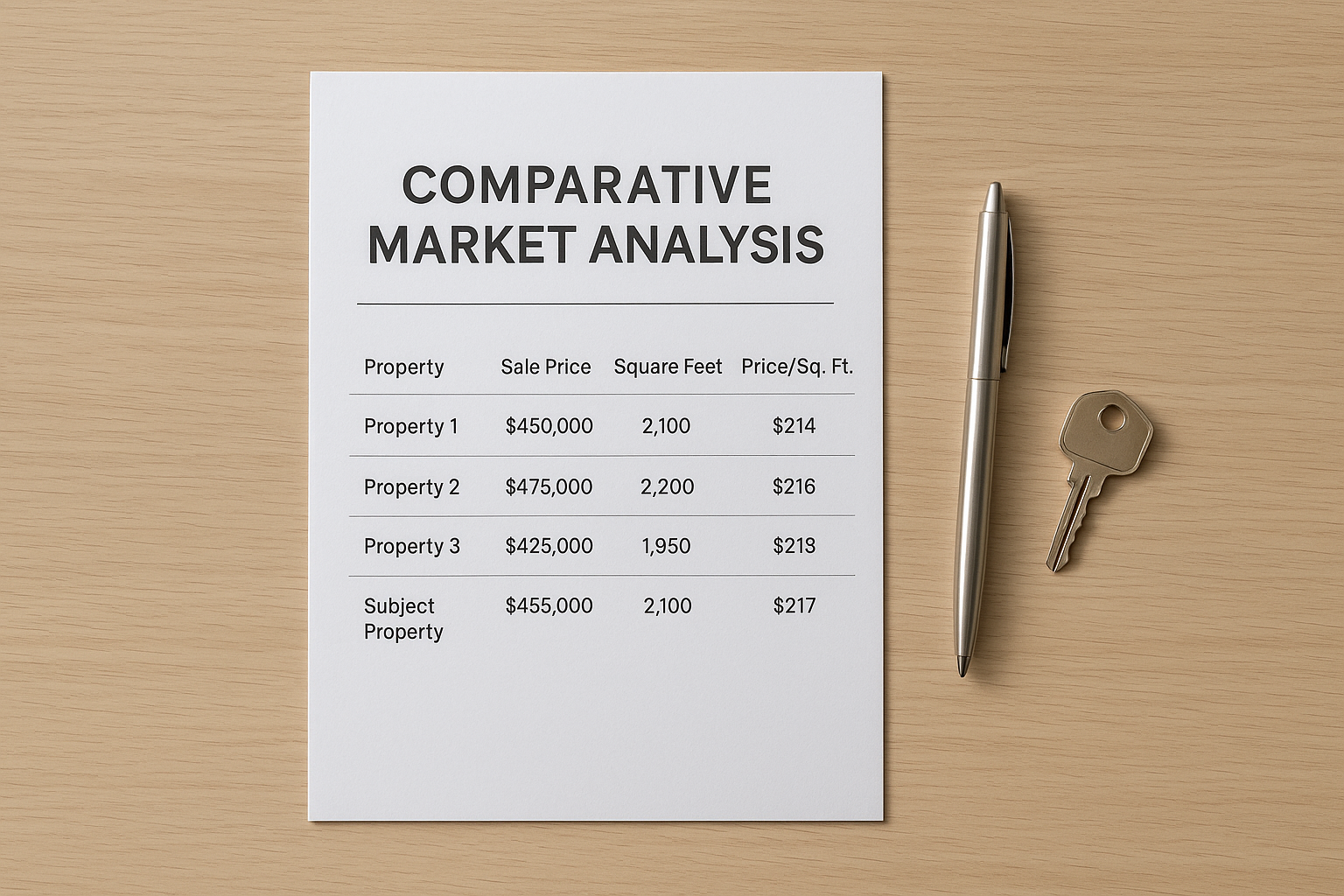
A fast, data-backed CMA helps close the gap between interest and a signed listing agreement.
Building a System Instead of Chasing One-Off Leads
Ultimately, consistent listing growth comes from a repeatable system rather than a lucky streak of referrals. Agents who combine predictive scoring, verified contacts, automated nurture, and a fast presentation process tend to build pipelines that keep producing listings month after month, not just when they happen to catch a seller at the right moment.
For agents who want additional prospecting angles to layer on top of a scoring-based system, these resources on predictive analytics for real estate seller leads and unique marketing ideas that win listings are worth reviewing alongside this guide.
Frequently Asked Questions About Listing Leads for Realtors
What are listing leads for realtors?
Listing leads for realtors are homeowners or properties showing measurable signs of being ready to sell, identified through seller-signal scoring, public records, or direct engagement rather than random cold lists. They give agents a prioritized starting point instead of a blind stack of names.
How do real estate agents find seller leads without paying referral fees?
Agents can use seller-intelligence platforms that score homes using public and market data, then supply verified owner contact information directly, instead of buying shared leads from a referral network. This keeps the full commission with the agent instead of splitting it with a third party.
What makes a homeowner a "hot" seller lead?
A hot seller lead typically shows multiple strong signals at once, such as long ownership tenure, rising equity, life-event indicators, or active engagement with home value tools. Scoring models combine these factors to rank homes as Hot, Warm, or Cold.
How much do real estate referral leads typically cost?
Referral platforms commonly charge 25 to 40 percent of the commission earned on a closed deal, and the same lead is often shared with several agents simultaneously. A flat-fee seller-intelligence subscription avoids that ongoing commission split entirely.
How long does it take to convert a seller lead into a listing?
Conversion timelines vary widely, but many homeowners take months to decide, which is why consistent nurture matters more than a single phone call. A 48-week automated nurture sequence keeps an agent visible throughout that entire decision window.
What is the difference between a lead list and seller-intelligence scoring?
A lead list is usually a static set of names with no indication of intent, while seller-intelligence scoring ranks properties by the likelihood of listing soon. Scoring helps agents prioritize who to contact first instead of working every name equally.
Can seller scoring replace farming a neighborhood?
Seller scoring can make neighborhood farming far more efficient by showing which specific homes in an area are showing signals, rather than mailing every address equally. Many agents combine both, using scoring to focus their farming budget on the strongest opportunities.
What common mistakes do agents make with listing leads?
The most common mistakes are contacting every name with equal urgency, giving up after one unanswered call, and building a full CMA before confirming real interest. Prioritizing by seller signal and automating follow-up solves both problems.
How does automated nurture help with listing leads for realtors?
Automated nurture keeps an agent's name in front of a homeowner on a regular schedule, even during busy weeks when manual follow-up would otherwise stop. Weekly touches over several months build familiarity so the agent is the first call when the homeowner is ready.
What should a listing presentation include after finding a seller lead?
A strong listing presentation should include a data-backed comparative market analysis, recent comparable sales, a pricing strategy, and a clear marketing plan for the home. AI-assisted CMA tools can assemble this material in minutes instead of hours.
Is SellScore Pro worth it for new agents?
New agents who lack a referral pipeline often benefit from a flat-fee platform that identifies likely sellers and supplies contact information, rather than paying away early commissions to a referral network. The lower fixed cost also fits tighter early-career budgets.
How much does SellScore Pro cost?
SellScore Pro offers a 3-day trial for $1, then renews at $99 a month for the Pro plan or $149 a month for Pro+, with no referral fees, commission splits, or long-term contracts. That works out to roughly $3.30 a day for the full platform.
Do seller-signal scores guarantee a home will sell?
No, seller-signal scores and related reports are informational prioritization tools, not an appraisal, a legal opinion, or a guarantee of a transaction. They indicate likelihood based on available data, and outcomes still depend on the homeowner's decision and market conditions.
Final Thoughts
In short, listing leads for realtors work best when they come from a system rather than luck. Scoring tells an agent where to look, verified contacts make outreach possible, a personal home value page gives homeowners a reason to engage, and automated nurture keeps the relationship alive for nearly a year. Together, these pieces replace the patchwork of lead lists, dialers, and referral platforms most agents juggle, and they do it without handing away a share of the commission. Agents ready to put this system to work can explore SellScore Pro's $1 trial and see which homes in their market are already showing the strongest seller signals.

