Geographic farming real estate is one of the oldest listing-generation strategies in the business, and it still works when an agent knows exactly where to focus. However, most agents farm a neighborhood blindly, mailing every household the same postcard with no idea who is actually close to selling. This article breaks down what geographic farming really means today, why the old approach is losing ground, and how seller-signal data is changing the way smart agents choose and work a farm area.
Quick answer: Geographic farming real estate means consistently marketing to homeowners in one defined area until you become the recognized listing agent there. Modern farming adds seller-likelihood scoring and automated nurture so agents spend time on homeowners who are actually close to selling, rather than mailing an entire neighborhood equally.
What Is Geographic Farming in Real Estate?
Geographic farming in real estate is the practice of repeatedly marketing to homeowners inside one specific neighborhood, subdivision, or zip code instead of chasing leads scattered across an entire city. Rather than relying on a single mailer or a one-time call, an agent builds visibility over months or years so that when a homeowner finally decides to sell, the agent's name is already familiar.
Therefore, farming is less about a single tactic and more about a long-term relationship with a territory. Specifically, it combines consistent branding, useful content, and enough touches that homeowners associate the agent with that area. In contrast to cold-calling a list of strangers, farming builds familiarity first and conversations second.
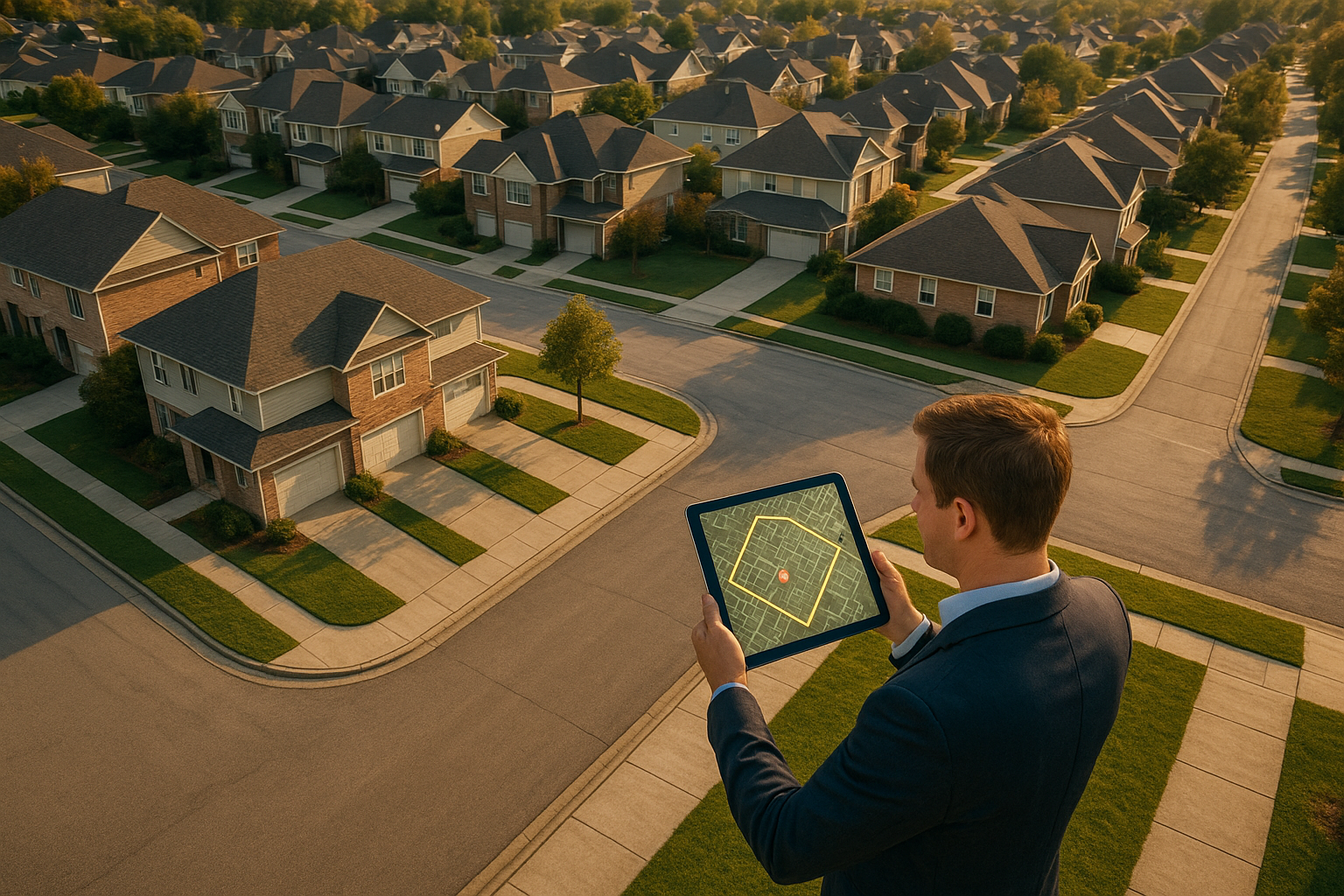
A well-chosen farm area is the foundation of any geographic farming real estate strategy.
Why Traditional Geographic Farming Real Estate Strategies Fall Short
Traditional geographic farming real estate strategies usually treat every home the same way. A postcard goes to all 500 homes in the farm, every month, regardless of whether a household has lived there two years or twenty. As a result, budget gets spent evenly across homeowners who have wildly different odds of listing anytime soon.
In addition, many agents choose a farm area based on gut feeling rather than data, which means they sometimes compete against three or four other agents already dominating that zip code. Meanwhile, quieter pockets with real seller activity go completely unnoticed. According to the National Association of Realtors, only a small single-digit percentage of home sales happen without an agent, which means nearly every home in a farm area will eventually use one. The challenge is not whether those homeowners will sell with an agent; it is knowing which ones are closest to doing it now.
The Focus Problem, Not a Lead Problem
Most agents do not actually lack leads inside their farm; they lack a way to sort them. Consequently, hours get spent building comparative market analyses, a formal pricing report that compares a home to recent nearby sales, for homeowners who were never close to listing. A smarter geographic farming real estate approach starts by identifying who is showing real signals first.
How Seller Signals Are Changing Neighborhood Farming
Neighborhood farming is shifting from a mass-mail model toward a prioritized model built on data. Instead of guessing, agents can now see which homes in a farm area are flagged hot, warm, or cold based on ownership length, equity position, permit activity, and other market signals. This is essentially what SellScore Pro's scoring engine does across all 50 states, turning a flat list of addresses into a ranked prospecting plan.
For example, a homeowner who has owned a property for eleven years, has significant equity, and recently visited a home value estimate page multiple times is showing far stronger signals than a neighbor who moved in last year. Similarly, engagement tracking, which shows email opens, link clicks, and report activity, gives agents a second layer of evidence. As a result, the farm stops being a guessing game and starts behaving like a prioritized pipeline.
If you are comparing broader prospecting software, this breakdown of real estate farming software built to find sellers first walks through how scoring and contact data work together in practice.
How to Build a Modern Geo-Farming Plan in 6 Steps
Building an effective geo-farming plan does not require abandoning the fundamentals of farming. Instead, it means layering data and automation onto a proven structure. Here is a practical sequence agents can follow.
- Define your farm boundaries. Choose a neighborhood or zip code with 300 to 1,000 homes, healthy turnover, and values that match your commission goals.
- Pull seller-signal data. Identify which homes show hot, warm, or cold signals before spending a single dollar on outreach.
- Add verified contact information. Attach phone numbers and emails to your highest-priority homes so outreach actually reaches a person.
- Launch automated nurture. Set up recurring emails or mailers so every homeowner receives consistent value over many months.
- Track engagement. Watch opens, clicks, and page visits to see who is actively researching their equity or a potential move.
- Follow up personally on hot signals. Call or visit the homeowners whose engagement has risen sharply, since they are statistically closest to a decision.
Choosing the Right Farm Area for Your Business
Picking the right farm area matters as much as the marketing itself. Above all, look for a territory where turnover is healthy, meaning homes sell often enough that patience pays off within a reasonable timeframe. A neighborhood where nobody has moved in a decade will test even the most disciplined agent.
Furthermore, home values should align with the commission income you are targeting, since farming a $150,000 starter-home area requires a different volume strategy than farming $900,000 estates. Competition matters too. If three well-known agents already dominate a zip code's mailboxes, a quieter adjacent neighborhood with similar seller activity may be the smarter entry point. Specifically, the SellScore Pro Heat Map is designed to show agents where seller opportunity is strongest around any given property, which helps surface these overlooked pockets before committing a marketing budget.
Tools That Make Territory Farming More Efficient
Territory farming used to require a patchwork of tools: a list provider, a dialer, a CRM, an email platform, and separate presentation software. Juggling all of them often causes follow-up to slip, which is precisely where consistent farms fall apart.
Consolidated platforms reduce that friction. For instance, SellScore Pro combines seller scoring, Contact Find, a Personal Home Value Page, 48 weeks of automated nurture emails, engagement tracking, and an AI-powered CMA builder in one workflow, built for about $3.30 a day with no referral fees or long contracts. Likewise, agents who want to improve the calling side of their farm can review this guide to the best dialer for real estate agents or this breakdown of an auto-dialer built for calling farmed neighborhoods efficiently.
In addition, pairing data-backed prospecting with strong creative still matters. These creative marketing ideas that win listings and this marketing idea that wins more listings both pair well with a prioritized farm area. For a full look at how the platform fits together, visit SellScore Pro directly.
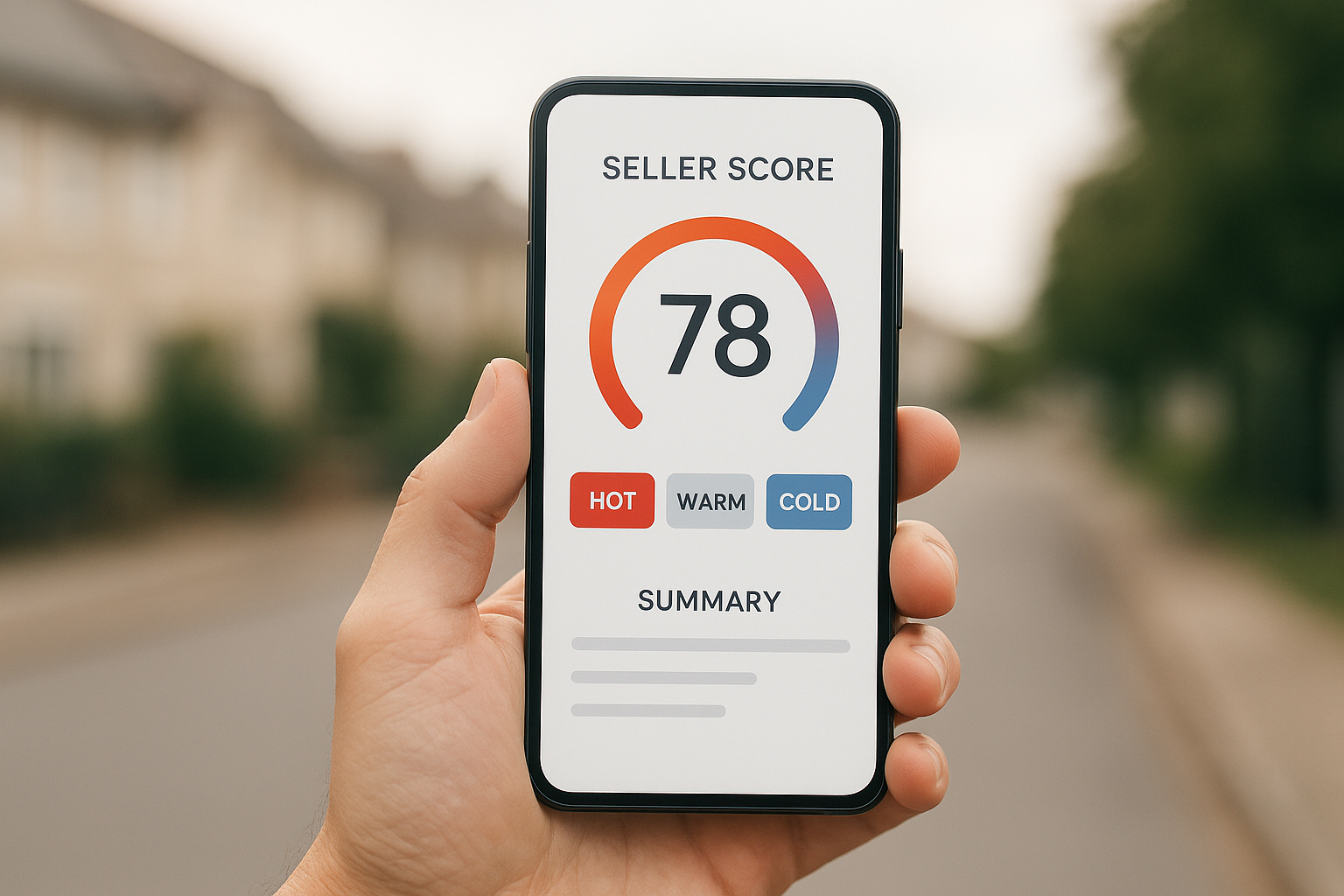
Scoring tools help agents focus limited time on the strongest farm area opportunities.
Common Mistakes to Avoid When Farming a Neighborhood
Even experienced agents repeat a few predictable mistakes when farming a neighborhood. First, switching farm areas too soon is common; many agents quit after three or four months, right before consistency would have started paying off. Second, treating every home identically wastes budget on households with no near-term intent to sell.
Third, some agents ignore fair housing boundaries by selectively excluding parts of a territory, which can create legal exposure. The U.S. Department of Housing and Urban Development outlines fair housing obligations that apply to any marketing campaign, including farming, so reviewing those guidelines before launching a farm is a reasonable precaution. Finally, neglecting follow-up after the first unanswered call is one of the costliest mistakes, since most seller relationships develop gradually rather than converting on the first touch.
Avoiding these mistakes keeps a geographic farming real estate plan consistent over time.
Frequently Asked Questions About Geographic Farming Real Estate
What is geographic farming in real estate?
Geographic farming real estate is a prospecting strategy where an agent consistently markets to homeowners inside one defined neighborhood or zip code instead of chasing scattered leads citywide. The goal is to become the recognized listing expert for that specific area over time.
How does geographic farming differ from buying leads?
Farming builds long-term brand recognition inside one territory, while bought leads are often shared with several agents and come with referral fees. As a result, farming lets an agent own the relationship instead of renting it.
How much does it cost to start farming a neighborhood?
Traditional farming with direct mail and flyers can run several hundred dollars a month per farm area. In contrast, seller-intelligence platforms like SellScore Pro reduce that cost by starting at about $3.30 a day.
How long does it take to see results from geographic farming real estate?
Most agents see the first inquiries or conversations within 60 to 90 days, but consistent listings typically take six to twelve months of steady touches. Therefore, farming rewards patience and repetition over quick wins.
How do I choose the best farm area for my business?
Look for 300 to 1,000 homes with healthy turnover, home values that match your target commission, and limited existing competition from other dominant agents. A tight, well-chosen area generally outperforms a large, unfocused one.
What is the biggest mistake agents make when farming a neighborhood?
The most common mistake is farming blindly, mailing every home equally instead of prioritizing the ones showing real seller signals. Unfortunately, this wastes budget on homeowners who have no intention of listing soon.
How many homes should be in a geographic farm?
Most successful farms hold between 300 and 1,000 homes, depending on the agent's budget and follow-up capacity. Smaller farms allow for more personal touches, while larger ones require automation to stay consistent.
Is direct mail still effective for geographic farming?
Direct mail still works, particularly for brand recognition, but it performs best when paired with digital touches and seller-signal data rather than used alone. Combining channels generally increases response rates.
Can I farm more than one neighborhood at once?
Yes, but most agents should master one farm area before expanding, since consistency matters more than coverage. Fortunately, automated nurture tools make running two or three farms manageable without sacrificing quality.
What seller signals indicate a homeowner is about to sell?
Common signals include length of ownership, equity position, life events, permit activity, and repeated visits to home value pages. Platforms that score these signals as hot, warm, or cold help agents prioritize outreach.
Do I need a CRM to farm a neighborhood effectively?
A customer relationship manager, or CRM, helps, but it is most effective when combined with contact data, automated nurture, and engagement tracking in one workflow. Otherwise, juggling separate tools often causes follow-up to slip through the cracks.
Is geographic farming legal and compliant with fair housing rules?
Geographic farming is legal, but agents must market to every home in the defined area equally and avoid excluding areas based on protected characteristics. For that reason, reviewing HUD fair housing guidance before launching a farm is strongly recommended.
What makes modern geographic farming real estate more effective than old-school methods?
Modern geographic farming real estate layers seller-signal scoring, contact data, and automated nurture on top of traditional visibility tactics. Consequently, agents can prioritize the homeowners most likely to sell instead of mailing everyone at the same frequency.
Final Thoughts on Farming Smarter
Geographic farming real estate remains one of the most reliable ways to build a predictable listing pipeline, but the agents winning the most business today are not the ones mailing the most postcards. Instead, they are the ones combining a well-chosen farm area with real seller signals, verified contact data, and consistent automated follow-up. As a result, their time goes toward homeowners who are actually close to selling, not every address on a list.
In short, farming has not become obsolete; it has become smarter. Agents who adopt this data-informed version of geographic farming real estate, using tools that score opportunity, surface contacts, and nurture relationships automatically, put themselves in position to earn more listings without paying away commission or waiting on a crowded referral platform. Starting a focused, data-backed farm today, even with a $1 trial, is a reasonable first step toward owning a territory instead of renting leads inside it.

