Real estate farming software is a technology platform that scores homes in a chosen area and surfaces the owners showing the strongest seller signals, so agents can focus their prospecting on real opportunity instead of guesswork. Instead of knocking on every door in a zip code, agents open a dashboard and see which specific homes look closest to listing. This shift matters because, as the National Association of Realtors has noted, most sellers stay in their home for close to a decade before moving, so blanket farming often wastes time on owners who have no plans to sell anytime soon. For agents ready to work smaller, smarter farms instead of larger ones, understanding how this technology works is the first step.
Quick answer: Real estate farming software scores every home in a territory for seller likelihood, then hands agents verified contacts and automated nurture so they spend their time on homeowners who are actually close to listing, not a whole neighborhood at once.
What Is Real Estate Farming Software?
Real estate farming software is a system that replaces blind geographic prospecting with ranked, data-driven targeting. In short, it tells an agent which homes in a farm are showing seller signals right now, rather than assuming every house deserves equal attention.
Traditionally, farming meant picking a neighborhood, mailing postcards to every address, and hoping someone eventually called. Consequently, agents spent money reaching homeowners who were years away from moving. Modern farming platforms instead pull in property records, ownership length, equity, and local market activity, then rank each home so agents know where to spend their limited hours. As a result, the same farm that once took months to work thoughtfully can now be prioritized in minutes.
Why Traditional Geographic Farming Falls Short
Classic geographic farming treats every home the same, regardless of whether the owner is thinking about selling next spring or has no plans to move for another twenty years. Because of this, marketing budgets and calling time get spread thin across homes that will never convert. In fact, most agents who farm this way report that only a small fraction of mailers or calls ever lead to a real conversation.
Furthermore, agents are not the only ones competing for these homeowners. Expired listings and FSBOs get called by dozens of agents within days, while referral platforms sell the same lead to several agents at once and take 25 to 40 percent of the resulting commission. In contrast, a scored farm lets an agent find the quieter opportunities other agents have not noticed yet, before a sign ever appears in the yard.
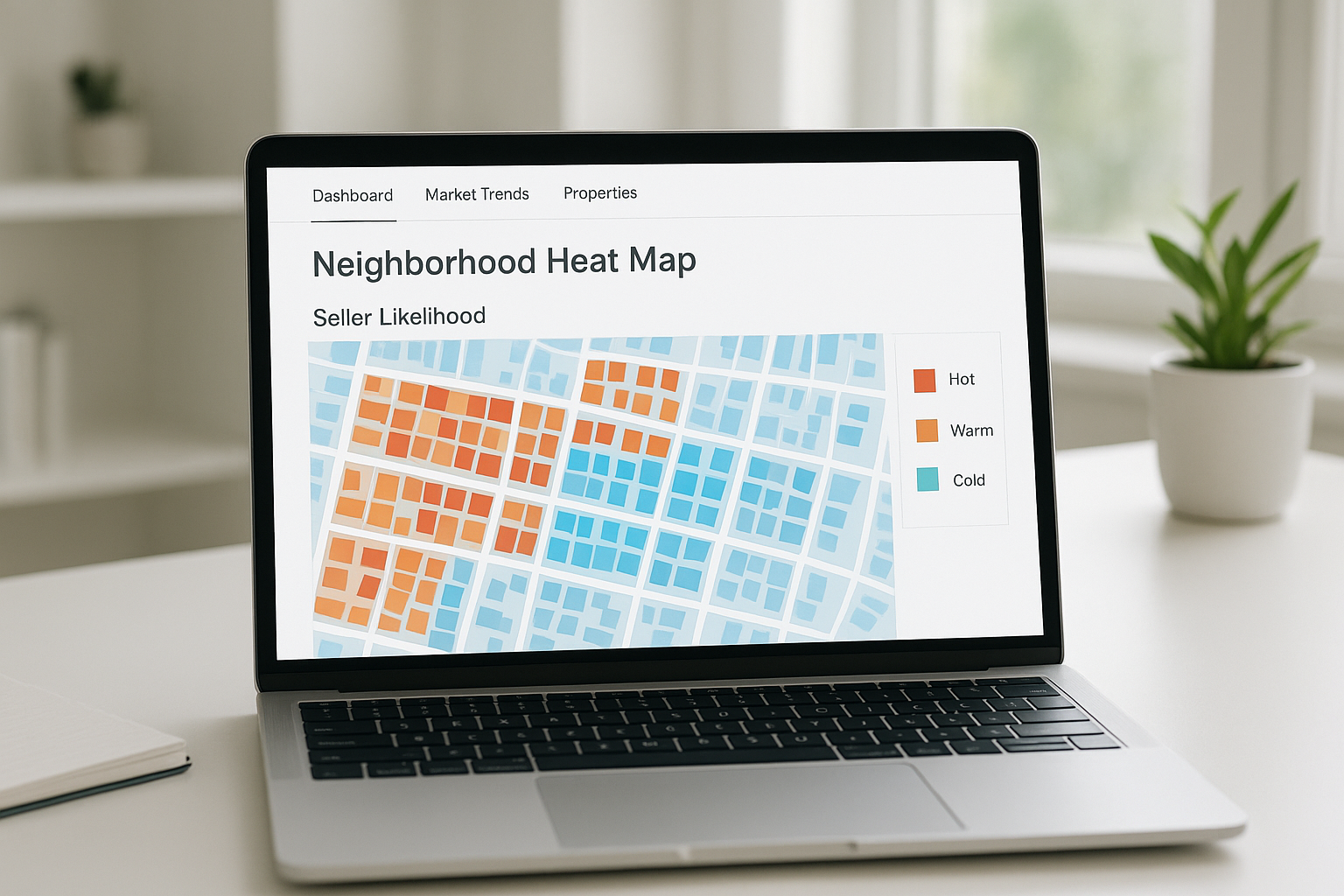
A scored heat map is the core of real estate farming software, showing exactly which homes to prioritize first.
How Real Estate Farming Software Finds Sellers First
Most platforms follow a similar five-step workflow, whether an agent is farming one street or several zip codes. Below is the general process behind tools like SellScore Pro, which was built by brokers specifically to help agents win more listings without renting their pipeline.
- Find the sellers. The software scores homes across the farm and labels each one Hot, Warm, or Cold, so the agent can see at a glance where to work next.
- Get the contact. Verified names, phone numbers, and emails are added to the top-ranked homes, turning a scored address into someone an agent can actually call.
- Attract sellers. A personal home value page lets curious homeowners request a more accurate estimate, revealing interest the agent would otherwise never see.
- Nurture automatically. Weekly emails keep the agent top of mind for close to a year, even during busy weeks when manual follow-up is not realistic.
- Watch engagement. Opens, clicks, and report views show exactly who is paying attention, so outreach can shift toward the homeowners who are warming up.
If you are also comparing outreach tools, it helps to see how this scoring approach differs from older list-based tactics in this breakdown of real estate prospecting software that finds sellers first.
Key Features to Look for in Farming Tools for Agents
Not every platform marketed as farming tools for agents actually delivers the same depth. Therefore, it helps to know what separates a useful system from a glorified mailing list.
- Nationwide or regional coverage with county and zip-level market data, so the scoring reflects your actual market conditions.
- Verified owner contact details, since a ranked home is useless without a working phone number or email.
- Automated nurture campaigns that keep contact going for months, not just a single mailer or call attempt.
- Engagement tracking that shows opens, clicks, and report activity, so follow-up effort goes where interest is rising.
- Built-in CMA and presentation tools, which save the extra step of exporting data into a separate design program.
Agents who still rely heavily on phone outreach alongside their farm may also want to review this comparison of the best dialer for real estate agents before adding another tool to the stack.
Real Estate Farming Software vs. Buying Leads
Buying leads feels faster at first, but it often costs more in the long run. Referral platforms typically take 25 to 40 percent of the resulting commission, lock agents into contracts, and sometimes sell the same homeowner's information to multiple agents at once. As a result, the agent is renting a pipeline rather than owning it.
Farming software works differently. Instead of buying a list someone else already contacted, the agent builds a relationship directly with homeowners identified through public and market data. Consequently, there are no referral fees and no shared leads, and the relationship belongs to the agent from the very first email or call.

Engagement tracking inside farming software shows which homeowners are actually paying attention.
SellScore Pro as a Neighborhood Farming Platform
SellScore Pro was built by real estate brokers who wanted a single neighborhood farming platform instead of a patchwork of lead lists, dialers, CRMs, and presentation software. The platform scores eligible residential properties across all 50 states, then gives agents a Heat Map, Contact Find for names and numbers, a personal Home Value Page, 48 weeks of automated nurture emails, and AI-powered CMAs, all for about $3.30 a day.
Pro includes 50 Contact Finds every month, while Pro+ doubles that to 100 for agents working a larger farm. Because there are no referral fees, commission splits, or long contracts, agents keep what they earn. You can review the full feature set and current pricing directly at SellScore Pro.
It is worth noting that scores, estimates, and reports generated by any seller-intelligence platform are informational tools meant to guide prospecting, not a formal appraisal or a guarantee that a homeowner will list. For background on how home valuation data is generally compiled, the U.S. Census Bureau's housing data offers useful context on how market-level housing statistics are gathered nationally.
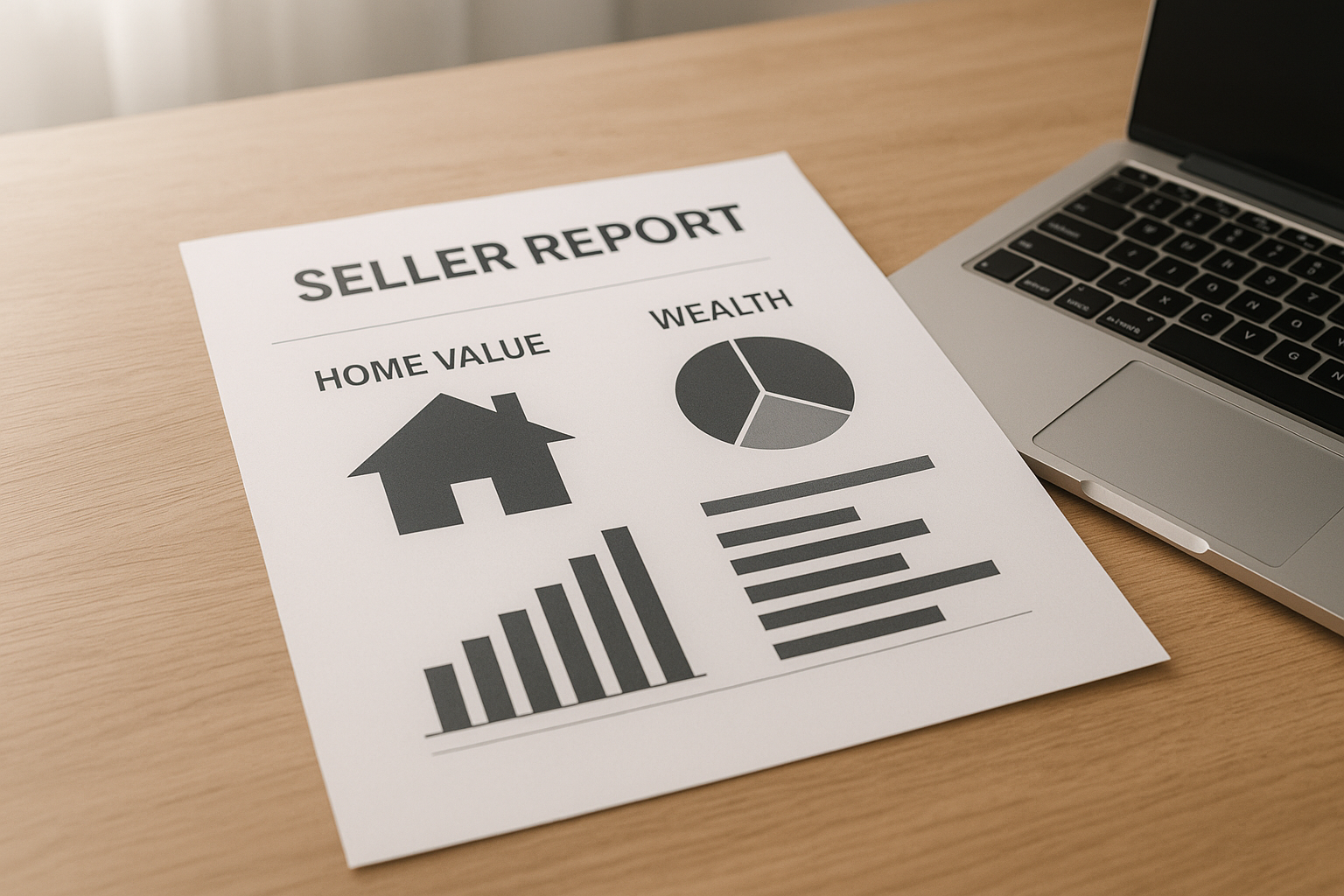
A printed or emailed Wealth Report gives agents a natural reason to open a conversation after a homeowner engages.
Pairing Farming Software With the Rest of Your Stack
Farming software works best when it connects to the rest of an agent's workflow rather than sitting apart from it. For instance, some agents still use AI writing tools to draft listing descriptions or social captions; this guide to ChatGPT for real estate agents covers practical ways to use AI alongside a farm. Similarly, farm-generated contacts often work well with an auto-dialer for real estate agents when it is time to move from nurture emails to live conversations.
On the marketing side, a scored farm pairs naturally with creative outreach beyond postcards. For additional inspiration, this roundup of unique real estate marketing ideas shows how agents turn farm data into campaigns that actually get opened.
Getting Started With a Scored Farm
Starting a scored farm does not require abandoning an existing book of business. Rather, most agents layer it in gradually, starting with a single zip code or a handful of neighborhoods they already know well.
- Choose one farm area and review the Hot and Warm homes first, since these represent the strongest near-term opportunity.
- Pull contact details for the top-ranked homes and build a simple weekly call list rather than trying to reach everyone at once.
- Turn on automated nurture emails so homeowners keep hearing from you even during a busy week of showings and closings.
- Check engagement activity every few days and move any homeowner who opens or clicks repeatedly toward a direct phone call or CMA offer.
Above all, consistency matters more than volume. A smaller farm worked every week will usually outperform a large one touched once a quarter.
Frequently Asked Questions About Real Estate Farming Software
What is real estate farming software?
Real estate farming software is a platform that scores homes in a chosen area to show which homeowners are showing the strongest signals of selling soon. It replaces blind door-knocking with a prioritized list of likely sellers.
How does real estate farming software find potential sellers?
It analyzes property and market data, such as ownership length, equity, and local activity, then labels each home Hot, Warm, or Cold based on seller likelihood. Agents then pull verified contact details for the homes worth calling first.
Why is traditional geographic farming less effective without data?
Traditional geographic farming treats every home in a zip code the same, even though most owners have no plans to sell. Without data, agents spend equal time on homes with low seller intent and homes that are genuinely close to listing.
How is real estate farming software different from buying real estate leads?
Purchased leads are often sold to multiple agents and come with referral fees of 25 to 40 percent off the commission. Farming software instead identifies likely sellers directly from public and market data, so the agent owns the relationship from the first contact.
How much does real estate farming software cost?
Pricing varies by platform, but tools like SellScore Pro run about $3.30 a day, roughly $99 a month for the Pro plan, with no referral fees or long contracts. A low-cost trial is usually available before committing to a monthly plan.
How long does it take to see results from a real estate farm?
Most agents see initial conversations within the first few weeks, but a farm typically needs three to six months of consistent contact to produce a steady flow of listings. Automated nurture sequences help maintain that consistency without extra daily effort.
What is the biggest mistake agents make when farming a neighborhood?
The most common mistake is farming too large an area with no way to prioritize homes, which spreads marketing dollars and calling time too thin. A smaller, data-ranked farm almost always outperforms a larger, unranked one.
What should agents look for before choosing farming software?
Look for nationwide coverage, verified owner contact information, automated nurture campaigns, and engagement tracking so you know who is actually paying attention. It also helps when the platform includes CMA and presentation tools so leads and listing materials live in one place.
Can real estate farming software replace a dialer or CRM?
Farming software can reduce the need for separate tools by combining lead scoring, contact information, nurture emails, and pipeline tracking in one system. Some agents still pair it with a dedicated dialer for high-volume calling days.
Does real estate farming software work in every state?
Coverage depends on the provider, but platforms built for nationwide use, such as SellScore Pro, score eligible residential properties across all 50 states with state, county, and zip-level data. Always confirm coverage for your specific market before signing up.
What happens after the free trial period ends?
After a short trial period, most platforms automatically convert to a standard monthly subscription unless the agent cancels first. It is worth checking the subscription management settings so you understand renewal pricing in advance.
Is real estate farming software worth it for new agents?
New agents often benefit the most, since farming software removes the guesswork of picking where to prospect while they are still building a reputation. It also provides scripts, coaching, and presentation tools that experienced agents may already have built on their own.
How often should agents follow up with farm contacts?
Weekly contact through email or direct mail keeps an agent visible without feeling intrusive, which is why many nurture sequences run on a roughly weekly cadence for nearly a year. Phone or in-person follow-up should increase as engagement signals like email opens and report views go up.
Final Thoughts
Real estate farming software ultimately comes down to focus. Rather than treating every home in a neighborhood the same, agents can see exactly which owners are showing real seller signals, reach them with verified contact information, and stay in touch automatically for nearly a year. As a result, time and marketing dollars go toward homeowners who are actually close to a decision, not a whole zip code at once. For agents ready to replace a patchwork of lead lists, dialers, and presentation tools with one system built around finding sellers first, platforms like SellScore Pro offer a practical starting point. Whichever platform an agent chooses, the core idea behind real estate farming software stays the same: find the opportunity, then work it consistently.
