Homeowner contact information for realtors is the set of verified names, phone numbers, and email addresses agents use to reach the people who own a home. Having accurate details is only half the job. Knowing which homeowners to contact, and how to reach them within the rules, is what turns data into listing conversations.
Quick answer: Agents get owner contact details from public records, referrals, and data platforms. The strongest approach is to prioritize homeowners by seller signals first, retrieve contact details second, and follow calling, texting, and brokerage rules every time.
What Is Homeowner Contact Information for Realtors?
It is owner-level data tied to a residential property. Typically that means a name, one or more phone numbers, and an email address. Agents use it to introduce themselves, share a home value page, or offer a market review.
However, data alone does not create trust. A phone number is not permission to call or text. It simply makes a respectful, compliant conversation possible.

An agent reviewing homeowner contact information for realtors before planning outreach.
Where Agents Find Owner Contact Details
Most agents combine several sources. Each one has trade-offs in cost, accuracy, and time.
| Source | Strength | Limitation |
|---|---|---|
| County public records | Owner names and mailing addresses | Rarely includes phone or email |
| Referrals and sphere | High trust | Limited volume |
| Open houses and events | Direct consent from visitors | Time intensive |
| Data platforms | Fast, scalable lookup | Accuracy varies by tool |
Why Prioritizing Homeowners Matters More Than Volume
Most agents do not have a data shortage. They have a focus problem. A long list of stale names means hours of calls to people who are not planning to sell.
For that reason, many agents now start with seller signals. SellScore Pro scores eligible residential properties across all 50 states as Hot, Warm, or Cold. The Heat Map then shows the strongest seller opportunities around any property. As a result, contact effort goes where it is most likely to matter.
For a deeper look at this approach, see this guide on finding homeowners likely to sell soon.
How Contact Find Supplies Owner Details
Contact Find adds names, phone numbers, and emails to a property so you can reach the homeowner. It is built into SellScore Pro, the listing agent operating system. Pro includes 50 Contact Finds every month, and Pro+ includes 100.
Contact Find data is information, not permission. You are still responsible for deciding whether and how to reach out, based on the rules below.
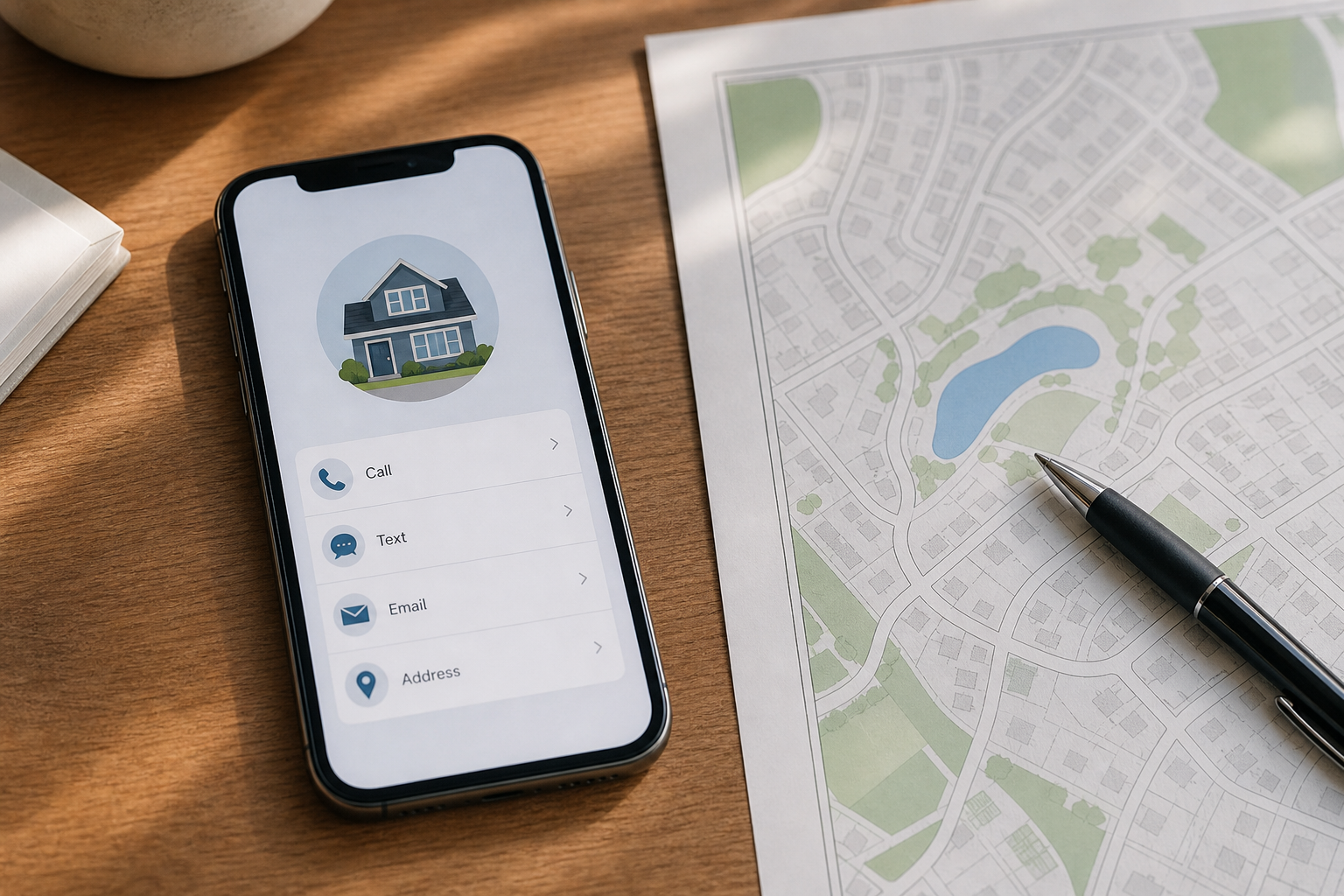
Contact details work best when paired with a clear reason to start a conversation.
Compliance Rules Every Agent Should Follow
Reaching out to homeowners is regulated. The Telephone Consumer Protection Act (TCPA) and the National Do Not Call Registry shape how agents may call and text. You can review the registry at donotcall.gov and learn about calling rules from the Federal Communications Commission.
In addition, your brokerage may have its own policies. Always follow applicable calling, texting, and outreach rules and your brokerage policy. If you are unsure, ask your broker or an attorney.
Fair housing also applies. Never include or exclude homeowners or neighborhoods based on any protected class. Our overview of auto-dialer compliance covers these themes in more detail.
How to Use Owner Contact Data Step by Step
- Prioritize homeowners showing the strongest seller signals.
- Retrieve names, phone numbers, and emails only for those homeowners.
- Screen numbers and confirm the rules and your brokerage policy before outreach.
- Lead with something useful, such as a Personal Home Value page or Wealth Report.
- Follow up consistently and log every result in your Pipeline.
Turning Contact Details Into Real Conversations
A cold pitch rarely works. A helpful reason to talk does. The Personal Home Value page lets homeowners share upgrades such as a kitchen remodel, pool, or solar, which online estimates often miss. That gives you a natural opening.
After that, consistency counts. SellScore Pro sends 48 weekly seller emails, one every seven days, and engagement tracking shows opens, clicks, and Wealth Report or CMA activity. Therefore you can see who is paying attention instead of guessing.
Many agents also find that a dialer alone does not win listings. This article on why a dialer is not enough explains why. For a wider view, read the listing prospecting guide and the listing leads overview.
What It Costs
SellScore Pro starts with a 3-day trial for $1, then $98 at the first renewal, then $99 per month for Pro. Pro+ is $149 per month. The trial is available one time only, and you can cancel anytime. There are no referral fees, commission splits, or contracts.
If a closing happens, compensation varies by agreement and transaction. As an illustration only, a $600,000 closing at a 2.5% gross commission side equals $15,000 before brokerage splits, expenses, and taxes.
Frequently Asked Questions
What is homeowner contact information for realtors?
It is the owner names, phone numbers, and email addresses that agents use to reach people who own residential properties. Agents use it to start listing conversations.
Where do agents find homeowner contact details?
Common sources include county public records, mailers, open houses, referrals, and data tools. Each source differs in accuracy and freshness.
Is it legal for agents to contact homeowners?
Contact is generally allowed, but calling and texting rules apply. Agents must follow the TCPA, Do Not Call rules, and brokerage policy. Check with your broker or an attorney for specifics.
Does having a phone number mean I can call or text?
No. A phone number is only data and does not grant permission to call or text. You remain responsible for screening and consent rules.
How does Contact Find work?
Contact Find adds names, phone numbers, and emails to a property so agents can reach the homeowner. Pro includes 50 Contact Finds each month and Pro+ includes 100.
Why prioritize homeowners before pulling contact data?
Prioritizing keeps your effort focused on homes with stronger seller signals. It also avoids wasting time on contacts unlikely to list soon.
How much does SellScore Pro cost?
The trial is $1 for 3 days, then $98 at the first renewal, then $99 per month for Pro. Pro+ is $149 per month. The trial is one time only and you can cancel anytime.
How is a contact list different from seller-lead intelligence?
A list gives names and numbers with little context. Seller-lead intelligence ranks homeowners by seller signals so you know who to contact first.
What are common mistakes when using owner contact data?
Typical mistakes include skipping Do Not Call screening, sending generic pitches, and giving up after one attempt. Another is failing to log activity.
How often should I follow up with a homeowner?
Consistency matters more than intensity. SellScore Pro automates 48 weekly seller emails, one every seven days, so outreach continues over almost a year.
Can I use contact data to target certain neighborhoods or groups?
You should never include or exclude homeowners or neighborhoods based on a protected class. Fair housing rules apply to all prospecting.
Are SellScores an appraisal?
No. Scores, estimates, and reports are informational tools, not an appraisal or a guarantee of any transaction.
Conclusion
Good homeowner contact information for realtors is most valuable when it follows smart prioritization and respects the rules. Start with seller signals, retrieve details for the right homeowners, lead with something useful, and follow up consistently. You can explore the full workflow at SellScore Pro.
Scores, estimates, reports and product guidance are informational tools. They are not an appraisal, legal advice, a guarantee of a transaction or a promise of an outcome. Agents remain responsible for independent professional judgment, factual property review, all communications, and compliance with applicable calling, texting and outreach rules and brokerage policy.

