Learning how to get seller leads in real estate is the single biggest lever an agent can pull toward a predictable listing business. Instead of chasing the same expired listings and FSBOs as every other agent in town, top producers find homeowners before the "For Sale" sign ever goes up. This guide walks through proven strategies, the data behind seller signals, and a smarter way to prospect without paying referral fees or splitting commissions.
In short, the fastest way to get seller leads in real estate is to combine seller-signal data, like a Hot, Warm, and Cold score, with verified owner contact information and automated nurture. That way, agents work the homeowners most likely to list instead of guessing which door to knock on next.
How to Get Seller Leads in Real Estate (Step-by-Step)
Most agents do not actually have a lead problem. In fact, they usually have a focus problem, because stale lists and blind farming waste hours on homeowners who were never going to sell. Therefore, the process below is built around signals first, contact second, and nurture third.
- Find the sellers. Start with a nationwide score that flags each home as Hot, Warm, or Cold, then use a heat map to see which streets have the strongest concentration of likely sellers right now.
- Get the contact. Add verified names, phone numbers, and emails to the highest-scoring properties, since finding a home is only useful once you can actually reach the owner.
- Attract sellers inbound. Share a personal home value page through social media, QR codes, flyers, and email so curious homeowners can add their own upgrades and start the conversation themselves.
- Nurture automatically. Enroll every lead into a long sequence, roughly one email a week for nearly a year, so visibility does not depend on a packed calendar.
- Track engagement signals. Watch email opens, link clicks, and report activity to see which homeowners are paying attention right now.
- Start the conversation with data. Deliver a professional report that invites the homeowner to share details and move naturally toward a listing appointment.

Reviewing a seller-signal heat map is one of the fastest ways to get seller leads in real estate without blind farming.
What Is Seller Lead Generation, Exactly?
How to get seller leads in real estate is, at its core, a repeatable process: identify the homeowners most likely to sell, confirm how to reach them, and stay in front of them consistently until they are ready. Seller lead generation, specifically, refers to the marketing and prospecting activity an agent uses to surface those homeowners before a competitor does.
Unlike buyer lead generation, which often converts within weeks, seller lead generation is a longer game. As a result, agents who rely only on one-time calls tend to lose momentum, while agents who build a nurture system stay relevant for months.
Why Most Agents Struggle to Find Motivated Sellers
Many agents farm neighborhoods blindly, call through outdated lists, and chase the same expireds and FSBOs as everyone else in town. Meanwhile, the homeowners quietly getting ready to list go unnoticed until a sign with someone else's name appears in the yard.
Buying leads from referral platforms often makes this worse. These platforms commonly take 25 to 40 percent of the resulting commission, lock agents into contracts, and sometimes hand the same lead to several agents at once. Consequently, agents end up renting their pipeline instead of owning it.
According to the National Association of Realtors' annual seller survey, typical home sellers lived in their house for roughly ten years before listing, which means seller signals build up quietly over a long period. That is precisely the window where data-driven prospecting outperforms guesswork. You can read more detailed national housing statistics directly from the National Association of Realtors research hub.
Strategies to Generate Seller Leads Without Paying Referral Fees
Agents who want to generate seller leads without giving away part of their commission tend to combine a few specific tactics instead of relying on one channel alone.
1. Prioritize homes by seller signal, not street address
Rather than farming an entire zip code evenly, focus on the specific homes showing the strongest combination of ownership length, equity, and life-stage signals. This article on how to find sellers first breaks down exactly which signals matter most.
2. Build an inbound home value funnel
A personal home value page lets curious homeowners enter upgrades, like a remodeled kitchen or new roof, that automated estimators typically miss. For more creative ways to drive traffic to pages like this, see these unique real estate marketing ideas that win listings.
3. Nurture for months, not days
Since most sellers take a long time to decide, a 48-week automated nurture sequence keeps an agent top of mind without requiring daily manual follow-up.
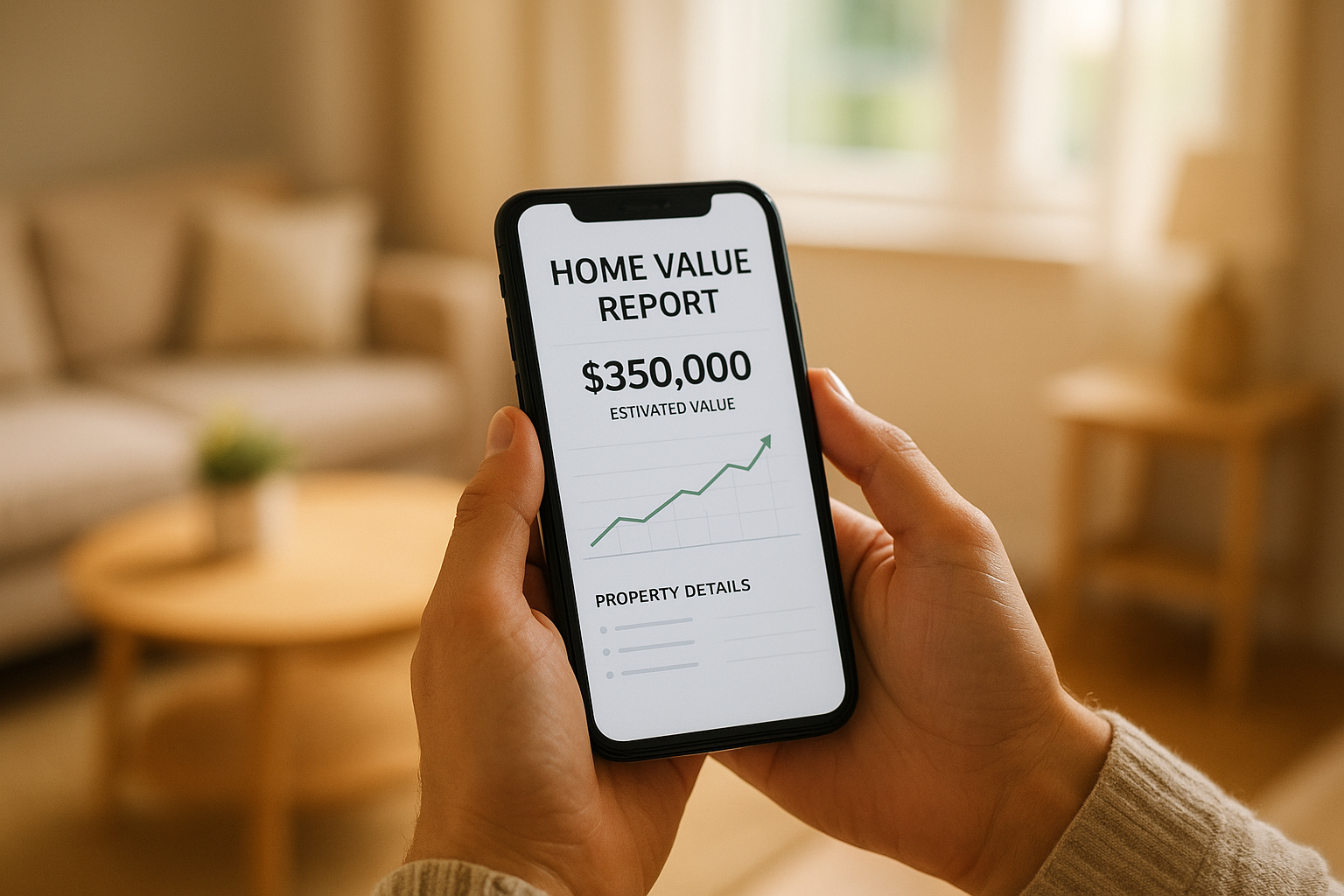
Inbound home value pages turn curious homeowners into real seller leads before they ever contact an agent.
How Seller Intelligence Software Finds Sellers Before the Sign Goes Up
Seller intelligence platforms, such as SellScore Pro, score eligible residential properties across all 50 states using property and market data, then classify each one as Hot, Warm, or Cold. Specifically, the Heat Map shows where seller opportunities are concentrated around any address, so agents can see at a glance where to prospect next.
Contact Find then adds verified names, phone numbers, and emails to those properties, with Pro plans including 50 contacts monthly and Pro+ plans including 100. In addition, engagement tracking shows email opens, link clicks, and report activity, which means agents can see exactly who is paying attention instead of guessing.
For agents comparing platforms, this breakdown of a seller lead intelligence platform built for 2026 and this overview of a listing lead generation tool for real estate agents cover feature differences in more depth. You can also explore the full platform directly at SellScore Pro, which costs about $3.30 a day with no referral fees or contracts.
Turning Engagement Into a Listing Appointment
Once a homeowner engages with a report or value page, an AI-powered comparative market analysis, often called a CMA, helps the agent respond quickly with a credible number. A CMA estimates a home's likely sale price using recent comparable sales, and you can read a general explanation of the method on Wikipedia's comparative market analysis entry.
As a result, the gap between "interested homeowner" and "signed listing" shrinks considerably when the follow-up is fast and data-backed rather than generic.
Common Mistakes When Prospecting for Sellers
Even experienced agents make avoidable errors when prospecting for sellers. First, many give up after one unanswered call instead of continuing a long-term nurture sequence. Second, some agents build full CMAs for homeowners who were never close to listing, which wastes valuable hours.
Furthermore, chasing only expireds and FSBOs puts an agent in direct competition with every other agent in town for the same small pool of leads. In contrast, focusing on quietly motivated homeowners, before a listing is public, reduces competition significantly.
Finally, agents sometimes rely on a single data point, such as years of ownership, instead of combining multiple seller signals. For a deeper look at identifying these homeowners earlier, this guide on finding homeowners likely to sell soon walks through a step-by-step method. Housing turnover patterns, tracked nationally by the U.S. Census Bureau's housing data, also show why signals shift from one local market to the next.
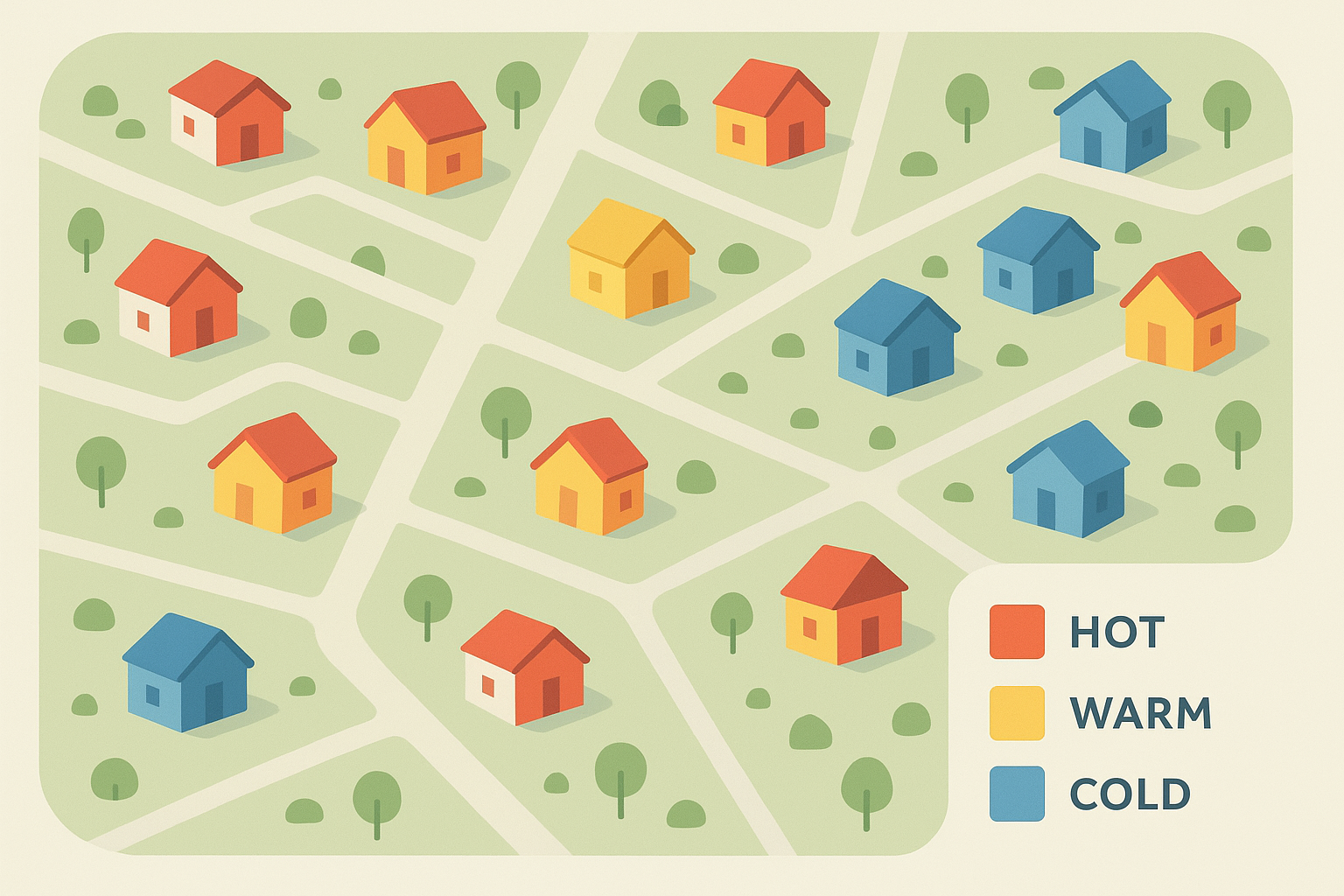
Color-coded seller signals help agents decide where to prospect first instead of farming every street equally.
Frequently Asked Questions About How to Get Seller Leads in Real Estate
How do I get seller leads in real estate?
The most reliable way to get seller leads in real estate is to combine seller-signal data with verified owner contacts and consistent, automated nurture. Platforms that score homes as Hot, Warm, or Cold help agents focus their time on homeowners most likely to list soon.
What is the difference between seller leads and buyer leads?
Seller leads are homeowners who may list their property, while buyer leads are people actively searching for a home to purchase. Seller leads generally take longer to convert but produce a listing commission plus a marketing asset that can attract buyer leads later.
How much do real estate seller leads typically cost?
Referral platforms often charge 25 to 40 percent of the resulting commission, while seller-intelligence subscriptions typically run a flat monthly fee instead. For comparison, a full seller-lead platform can cost as little as $3.30 a day with no commission split.
How long does it take to turn a seller lead into a signed listing?
Most seller leads take several months to a year to convert, since homeowners rarely decide to sell after a single phone call. Consistent nurture over 48 weeks or more significantly increases the odds an agent is remembered when the homeowner is finally ready.
What is seller lead generation software?
Seller lead generation software analyzes property and market data to flag homeowners showing signals of an upcoming sale, then supplies contact information and nurture tools. It replaces manual farming and guesswork with a prioritized, data-driven prospecting list.
Why do referral leads cost so much commission?
Referral platforms act as middlemen that generate a lead and then sell access to multiple agents, which is why they take a cut of the final commission. Agents who generate and own their own seller leads keep the full commission instead.
What's the biggest mistake agents make when prospecting for sellers?
The most common mistake is prospecting without data, which means hours spent calling homeowners who were never close to listing. Focusing only on verified seller signals, instead of random farming, saves time and improves conversion rates.
How many touches does it take to convert a seller lead?
Industry research generally suggests it takes multiple touches, often eight or more, before a seller lead converts into a working relationship. This is why automated weekly nurture over many months outperforms a single phone call or postcard.
Can I find seller leads without cold calling?
Yes, agents can attract seller leads through home value landing pages, social media, direct mail with QR codes, and automated email nurture. Many agents combine a small amount of calling with these inbound and automated channels for the best results.
What makes a homeowner a "hot" seller lead?
A homeowner typically becomes a hot seller lead when multiple signals line up at once, such as length of ownership, equity position, and engagement with a home value report. Software that scores these signals together is far more accurate than relying on any single data point alone.
How does a CMA help convert seller leads into listings?
A comparative market analysis gives a homeowner a realistic, data-backed estimate of what their home could sell for, which builds trust and urgency. A fast, professional CMA often moves a warm seller lead closer to signing a listing agreement.
Is farming still an effective way to generate seller leads?
Traditional geographic farming can still work, but it is inefficient because it treats every homeowner the same way. Combining farming with seller-signal scoring lets agents farm smarter by prioritizing homes most likely to list first.
What's the best free way to get seller leads in real estate?
Sharing a personal home value page through social media, email signatures, and business cards is one of the lowest-cost ways to attract seller leads. It lets curious homeowners start the conversation themselves instead of agents chasing cold contacts.
In conclusion, how to get seller leads in real estate comes down to replacing guesswork with signals, owning the pipeline instead of renting it, and staying visible for months, not days. Agents who prioritize homes showing real seller signals, secure verified contacts, and nurture consistently tend to out-convert agents working off stale lists. Tools built specifically for this workflow, like SellScore Pro, bring the scoring, contacts, nurture, and CMA tools into one place for about $3.30 a day, with a $1 three-day trial for agents who want to test the approach before committing.
